

Key Takeaways
Why food spending gets out of control on trips
Families routinely underestimate food costs when planning travel. A sit-down dinner for four, a couple of fast-food lunches, snacks from a gas station, and a coffee stop add up to $80 or more in a single day without any special occasion. Over a week-long trip that is a substantial chunk of the total budget, and it often comes as a surprise at checkout.
The problem is not that people are careless. It is that traveling removes the structures that normally keep food spending in check: the home kitchen, the regular grocery run, the packed lunch habit. When every meal requires a new decision in an unfamiliar place, convenience wins, and convenience costs more. The family travel budget checklist covers other surprise costs, but food deserves its own strategy before you leave the driveway.
Plan for the hungry hour
The stretch between 4 p.m. and 6 p.m. is when families are tired, attractions are closing, and fast food starts to look reasonable. Having a substantial afternoon snack ready, something with protein and carbohydrates, lets you hold off until you can make or find a proper meal at a normal price. Pack this snack from your morning supply bag, not from a vending machine.
What to prepare before you leave home
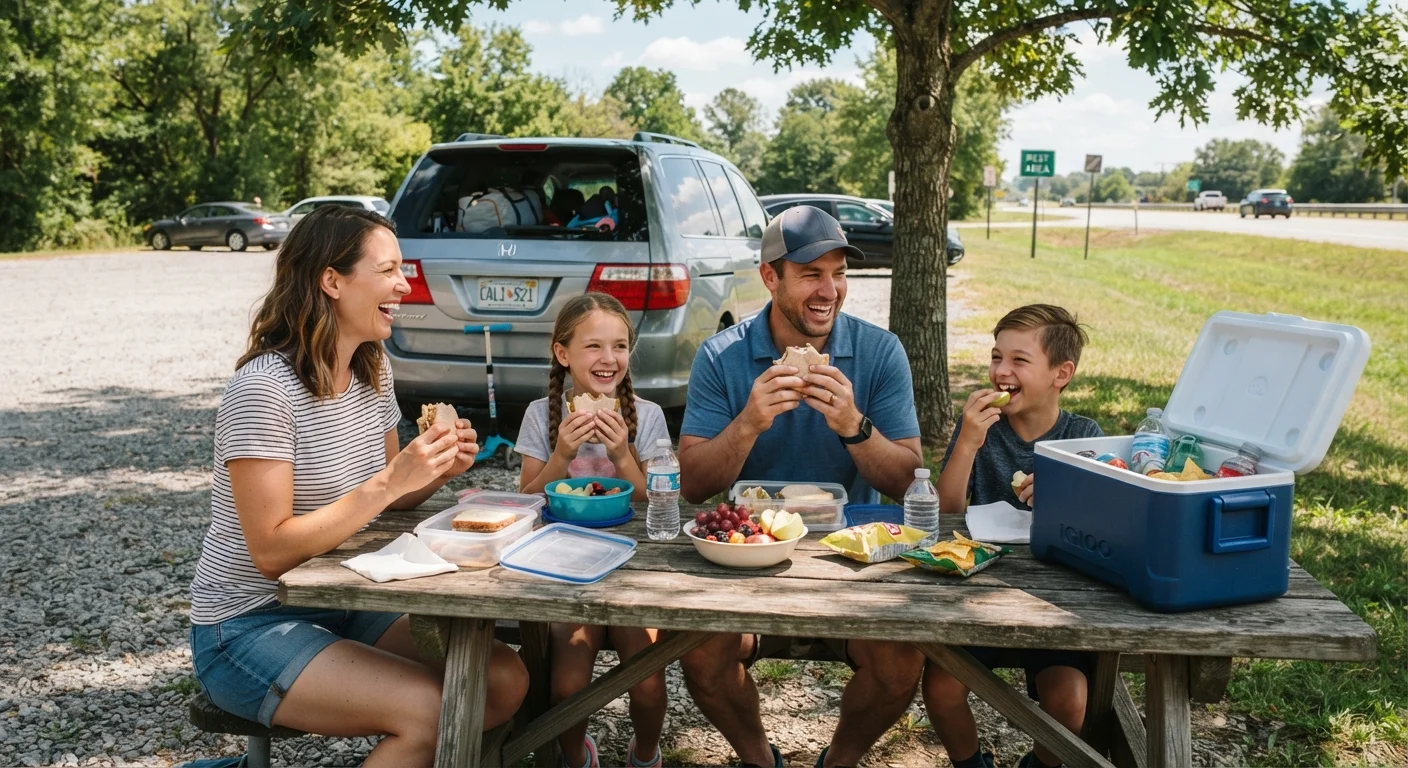
The most effective food savings happen before the trip starts. Do a full grocery run two to three days before departure. Focus on items that travel well: whole fruit, hard cheeses, nuts, crackers, shelf-stable nut butters, bread, and cut vegetables stored in sealed containers. For a road trip, a quality cooler packed with ice or ice packs lets you bring yogurt, deli meat, and pre-made sandwiches that cover the first two days on the road.
Write out a rough meal plan for each day, even if you only follow it loosely. Knowing that breakfast and lunch are covered from your own supplies means you can budget one restaurant meal per day rather than three. That shift alone can cut daily food spending by half. See the start-to-finish budget vacation walkthrough for how meal planning fits into the broader trip budget.
Step-by-step: how to keep food costs manageable on the road
The steps below are ordered by impact. Work through as many as your trip allows.
Book lodging with a kitchen or kitchenette
A room with even a basic kitchenette, a microwave, a mini-fridge, and a two-burner stove, changes what is possible. You can make breakfast every morning, store leftovers, and reheat grocery-store meals rather than eating out three times a day. Search specifically for extended-stay properties, vacation rentals, or suite-style hotels when comparing lodging options. The nightly rate may be slightly higher than a basic motel room, but the food savings over several days usually more than offset the difference.
Stop at a grocery store within 24 hours of arrival
Identify a grocery store near your lodging before you arrive, not after you are hungry and tired. Buy staples for the days ahead: eggs, bread, peanut butter, fresh fruit, snack items, and any ingredients for simple dinners you plan to cook. This single stop resets your food baseline for the trip. Compare unit prices rather than package prices to avoid overpaying for small travel-sized items.
Pack a full snack kit for each travel day
Before any day of activities, put together a bag with enough snacks to cover the whole day: a piece of fruit per person, something salty, something with protein, and a water bottle. This prevents the $4-per-item vending machine and gift shop food purchases that pile up at attractions. A small insulated bag works well and takes up little space in a day pack or stroller.
Use the lunch-over-dinner rule for restaurant meals
When you want a proper sit-down experience, go at lunch. Most US restaurants with dinner menus also serve lunch, and prices are typically lower for the same dishes or portion sizes. Set a per-meal budget before you sit down so the family knows the range. Skipping appetizers, sharing one dessert, and drinking water rather than sodas or lemonade can each cut a restaurant bill meaningfully.
Debrief daily spending at the end of each day
Take two minutes each evening to total up what you spent on food that day. This keeps the budget visible rather than invisible, and lets you adjust the next day if one meal ran over. A simple note in your phone is enough. Families who track food spending daily tend to finish trips closer to their original food budget than those who review only at the end.
Where to find real food away from tourist zones
Tourist-area restaurants price for people who will never return. Walking two or three blocks away from a main attraction typically drops meal prices noticeably. Grocery stores in residential neighborhoods, local ethnic markets, and food co-ops are where families living in a destination actually shop, and those prices reflect that. A rotisserie chicken, a bag of salad, and a loaf of bread from a grocery store feeds a family of four for less than two combo meals at a sit-down spot.
If you do want a restaurant meal, eat your main hot meal at lunch. Most restaurants serve identical or near-identical food at lunch for less than dinner prices, and portions are usually sufficient. This strategy works in most US cities. For broader food budget thinking that applies at home too, the family nutrition primer on a grocery budget and why healthy eating does not have to be expensive are worth reading before you go.
Gas station snacks and packaged convenience items feel inexpensive per unit but add up quickly, as this breakdown of convenience food spending explains. Buying a bag of apples or a box of granola bars at a grocery store at the start of the day costs less and lasts longer.