

Key Takeaways
Start here
Why affordable eating and good nutrition are not opposites
Next
The staples worth building every meal around
Then
Planning meals before you shop
Apply it
Making the most of what you already have
Finish strong
Keeping nutrition balanced without overthinking it
Why affordable eating and good nutrition are not opposites
A common assumption is that healthy food costs more. The data does not consistently support this. Many of the most nutrient-dense foods, including lentils, oats, cabbage, eggs, and canned sardines, sit at the lower end of the price scale. What drives grocery spending up is not nutrition but convenience: pre-cut produce, single-serve packaging, and ready-made meals carry a significant markup over their whole-food equivalents.
Packaged and processed items can feel like budget choices because individual units seem inexpensive, but their cumulative cost adds up quickly. Our article on convenience food spending walks through where those gaps tend to appear. The practical starting point for most families is shifting more of the grocery list toward whole, minimally processed ingredients, which also happens to align with standard dietary guidance.
This article provides general nutrition information for educational purposes only. It is not medical or dietary advice. Families with specific health conditions or nutritional concerns should consult a qualified healthcare professional or registered dietitian.
Complete protein
A food that contains all nine essential amino acids the body cannot make on its own. Eggs, meat, fish, and dairy are common examples; some plant combinations, such as beans and rice, also provide all nine.
Dietary fiber
The indigestible part of plant foods that supports digestive health and helps you feel full. Beans, lentils, oats, and vegetables are good sources.
Minimally processed food
A food that has been altered as little as possible from its natural state, such as dried beans, plain oats, or frozen vegetables with no added sauce or seasoning.
Nutrient density
A measure of how many nutrients a food provides relative to its calorie count. Foods with high nutrient density, like leafy greens and legumes, deliver more vitamins and minerals per dollar and per calorie.
Legumes
A food group that includes beans, lentils, chickpeas, and peas. Legumes are affordable, high in protein and fiber, and can substitute for meat in many recipes.
The staples worth building every meal around
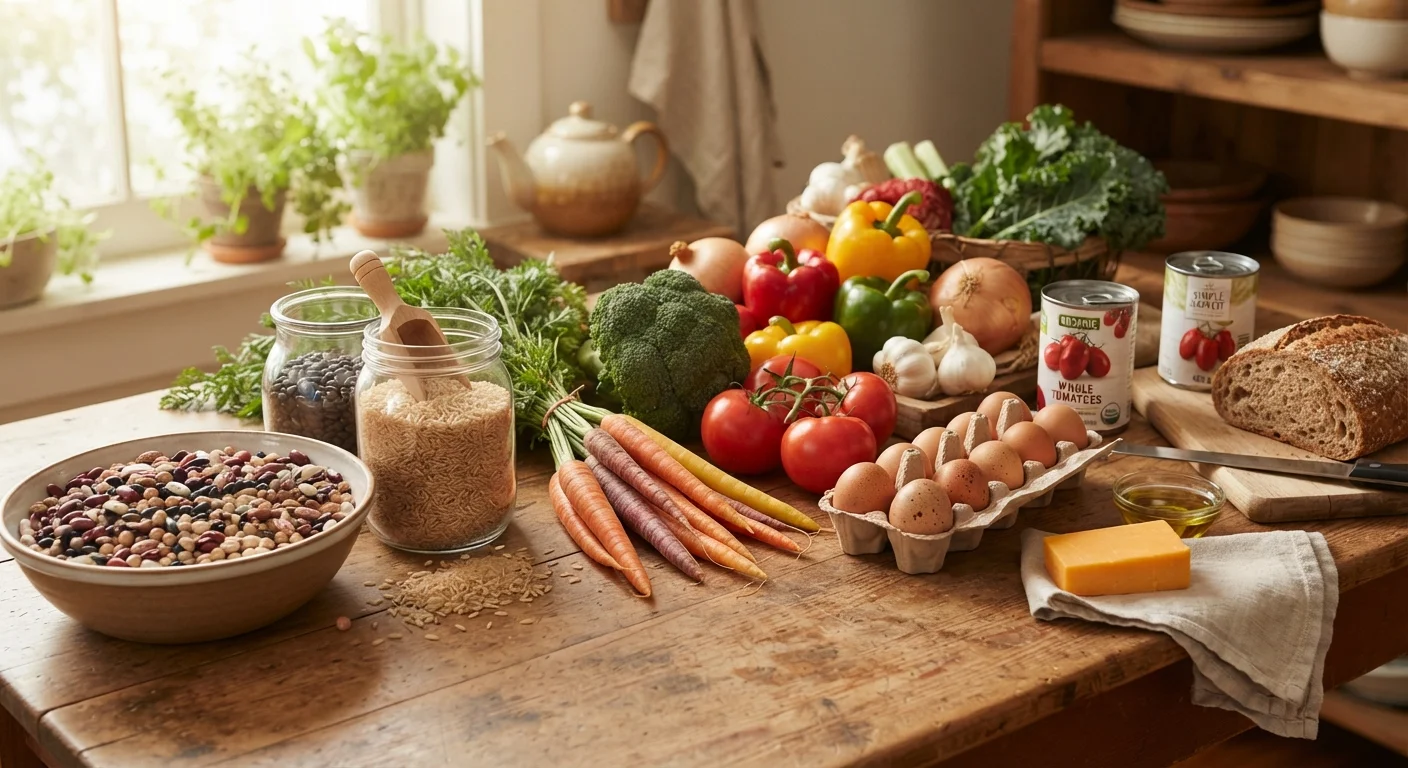
A short list of flexible staples can anchor almost any meal. Dried beans and lentils are among the most cost-efficient protein sources available, and they double as a significant source of fiber and iron. Brown rice, oats, and whole-grain pasta provide sustained energy and keep per-serving costs very low. Eggs are one of the few foods that supply complete protein, healthy fats, and several vitamins in a single, inexpensive package.
Frozen vegetables deserve more attention than they typically get. Because they are frozen shortly after harvest, they retain most of their vitamins and minerals, often more than fresh produce that has traveled long distances or sat in a refrigerator for days. Canned tomatoes, canned fish such as tuna or sardines, and low-sodium canned beans extend the pantry further without requiring refrigeration.
Families thinking about growing some of their own produce can find a practical starting point in our guide to starting a vegetable garden at home on a low budget.
Planning meals before you shop
Buying food without a plan is one of the fastest ways to overspend. A simple weekly meal plan, even a rough one written on a notepad, lets you build a grocery list from actual meals rather than vague intentions. That means fewer items sit unused until they spoil, and impulse purchases lose their pull because the list already exists.
Planning around what is already in the pantry before writing a new list also reduces spending. Checking the freezer and cupboards first often reveals the core of several meals that just need one or two fresh additions. Our family budget planner guide covers how to organize household spending categories so each shopping trip starts with a realistic plan rather than guesswork.
Plan meals around sales, not the other way around
Check your grocery store's weekly circular before writing your meal plan. If chicken thighs or a particular vegetable is marked down, build a meal or two around that item rather than buying it regardless of price. This one habit can meaningfully reduce weekly spending without changing what your family eats overall.
For families new to tracking grocery spending and finding savings, deal-finding for beginners covers the core habits that make a real difference without requiring a lot of extra time.
Making the most of what you already have
Food waste is a budget problem as much as a nutrition one. When produce wilts or leftovers go uneaten, families effectively pay for food they do not consume. A few habits address this directly.
- Use vegetable trimmings, onion skins, and herb stems to make a simple broth rather than discarding them.
- Cook a larger batch of grains or beans at the start of the week and repurpose them across several meals.
- Store fresh produce correctly: most leafy greens last longer when wrapped loosely in a dry cloth and kept in a sealed container in the refrigerator.
- Freeze bread, ripe bananas, and cooked portions before they pass their peak rather than after.
Thinking about whether to buy in larger quantities can also affect waste and cost. Our comparison of bulk buying versus buying as needed helps families weigh which approach suits their situation.
Keeping nutrition balanced without overthinking it
Basic nutritional balance does not require counting grams or tracking every meal. A practical structure is to fill roughly half of each plate with vegetables or fruit, a quarter with a whole grain, and a quarter with a protein source. That pattern accommodates a wide range of budgets and tastes without demanding precision.
Variety matters more than perfection. Rotating through different vegetables, legumes, and protein sources across the week provides a broader range of nutrients than eating the same few foods daily, however nutritious those foods might be. This also keeps meals more interesting for children, which reduces the friction of getting them to eat.
Building these habits fits naturally into a broader family wellness routine. Our guide to building a family wellness routine from scratch covers how nutrition, sleep, and activity habits can develop together without overhauling your schedule. Families managing specific health conditions, food allergies, or developmental concerns should work with a registered dietitian rather than applying general information to those circumstances.