

Key Takeaways
Vehicle maintenance schedule
A vehicle maintenance schedule is a manufacturer-specified list of services, inspections, and fluid changes tied to mileage or time intervals. It tells you what to do and when, based on how your particular engine, transmission, and drivetrain were designed to operate. Following it helps prevent breakdowns and preserves the mechanical health of your car over time.
Most modern vehicles have two schedules: a normal-use schedule and a severe-service schedule that applies to conditions like frequent short trips, towing, or extreme temperatures.
Where the schedule actually comes from
Car manufacturers engineer each model to specific tolerances, then test it to determine how long fluids, filters, belts, and other components last under real driving conditions. That testing produces the maintenance schedule in your owner's manual. It is not a sales tool. It is the closest thing to a technical spec sheet for keeping your vehicle running as designed.
Shops and dealers often hand out their own service menus, which can include intervals shorter than the manufacturer's or services the manual does not mention. Those menus are not necessarily wrong, but they are also not the same document. If a shop recommends something, the first question worth asking is whether it appears in your owner's manual and at what interval.
For a deeper look at what happens when scheduled services get delayed, see why skipping routine maintenance ends up costing more.
Normal service vs. severe service: which applies to your family?
Every maintenance schedule has two tracks. The normal-service track assumes mostly highway miles, moderate temperatures, and infrequent towing. The severe-service track covers the rest: short daily trips under five miles, lots of stop-and-go traffic, dusty roads, extreme heat or cold, and regular hauling or towing.
Short trips are the main reason many American families fall into the severe-service category without realizing it. When a cold engine never fully warms up, moisture and combustion byproducts accumulate in the oil faster than they would on a highway run. Over time, that accelerates wear on rings, bearings, and camshaft surfaces.
Check the severe-service criteria in your manual. If two or more conditions apply to your typical week, use the severe-service intervals. The difference is usually one or two extra service visits per year, which is a small cost relative to the engine wear it prevents.
68%
U.S. drivers who do not read their owner's manual regularly
A survey by AAA found that a large share of drivers rely on shops or general advice rather than their vehicle's own manual for service timing guidance.
5,000-10,000 mi
Typical synthetic oil change interval for modern vehicles
Many manufacturers specify this range for vehicles using full synthetic oil under normal driving conditions, replacing the older 3,000-mile standard.
2x-5x
Cost multiplier when a timing belt failure causes engine damage
Repair costs for interference engine damage caused by a broken timing belt are commonly several times the cost of a scheduled belt replacement, according to automotive repair data.
Oil changes: the most misunderstood interval
The 3,000-mile oil change became standard advice when most cars used conventional motor oil and had less precise engine tolerances. Many vehicles built after 2000, and nearly all built after 2010, are designed for synthetic oil and longer change intervals, often 5,000 to 10,000 miles depending on the model.
Your owner's manual specifies the oil type and interval. Some newer vehicles also have an oil-life monitoring system that calculates the actual condition of the oil based on driving patterns, temperature, and engine load, then alerts you when a change is due. If your car has this system, the manual explains how to use it and whether it replaces or supplements a fixed mileage interval.
For a broader look at how the 3,000-mile rule and other common beliefs hold up, car maintenance myths that may be draining your wallet covers the evidence in detail.
What the other intervals are actually measuring
Beyond oil, the maintenance schedule tracks components that wear or degrade on their own timelines. Cabin air filters, engine air filters, spark plugs, coolant, brake fluid, and transmission fluid each follow intervals based on exposure to heat, pressure, and contamination cycles rather than simple mileage.
Tire rotation is typically scheduled every 5,000 to 7,500 miles because front and rear tires wear at different rates. Rotating them redistributes that wear and extends the set's overall life. Tire care: rotation, inflation, and tread life explains how rotation schedules interact with inflation and tread checks.
Timing belts (on vehicles that have them rather than a timing chain) carry some of the highest stakes in the schedule. A belt that breaks while the engine runs can cause serious internal engine damage, and the repair cost is typically several times what the scheduled belt replacement would have been.
Cross-check before you approve a service
Before agreeing to any service a shop recommends, look it up in your owner's manual. Note the mileage you are at and whether you meet the severe-service criteria. If the shop's recommendation falls significantly earlier than the manual's interval and your driving conditions do not justify it, it is reasonable to ask why the earlier timeline applies to your vehicle specifically.
How to read and use your schedule day to day
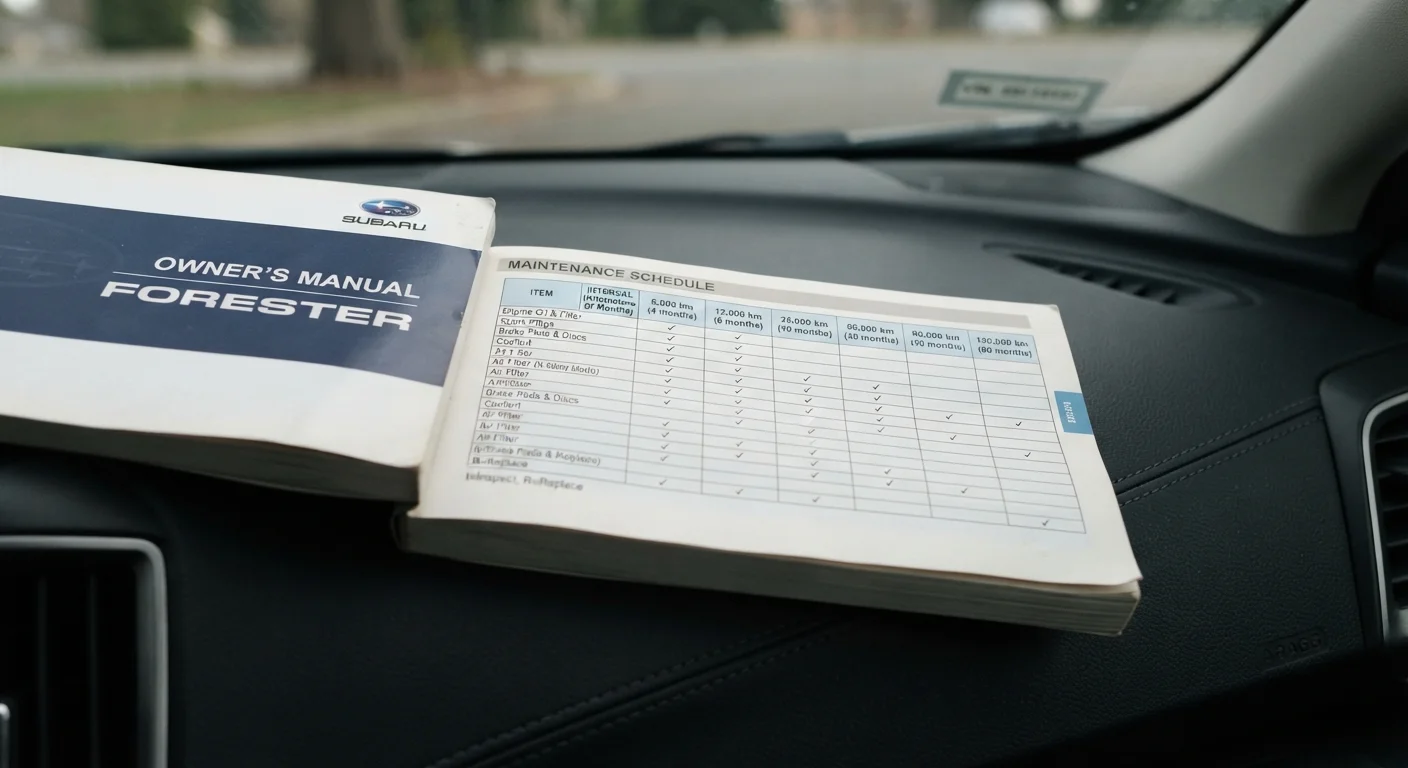
Pull out your owner's manual and find the maintenance section. You will usually see a table organized by mileage intervals with columns listing each service. Some manuals also include a time-based column (months or years) alongside mileage. Follow whichever trigger you reach first.
Keep a simple log. A notes app, a small notebook in the glovebox, or a spreadsheet works fine. Record the date, mileage, and what was done each time you have service performed. This makes it easy to see what is coming due and gives you documentation if a warranty dispute arises. It also helps if you ever need to review a repair estimate and want to confirm what work was already completed recently.
If you are trying to build habits that keep a vehicle running well over the long term, habits that extend the life of any car covers the low-effort practices that add up over time.