

Key Takeaways
Start here
Why tire care affects your wallet
Next
Tire rotation: what it does and when to do it
Then
Inflation: getting the pressure right
When you're ready
Tread depth: how to check it and when to act
Wrap up
Putting it all together
Why tire care affects your wallet
A set of four tires is one of the larger recurring costs in vehicle ownership. Depending on vehicle type and tire grade, replacement sets can run anywhere from a few hundred to well over a thousand dollars. That cost arrives much sooner when tires wear unevenly or are run at the wrong pressure.
The good news is that three habits, rotation, inflation checks, and tread monitoring, can stretch the life of a set considerably without requiring any special tools beyond a $10 tire gauge. For families trying to keep car costs predictable, these are among the highest-return maintenance tasks available. As skipping routine maintenance shows, small deferrals tend to compound into bigger bills.
Tire rotation: what it does and when to do it
Front and rear tires wear at different rates. On front-wheel-drive vehicles, the front tires handle both steering and power delivery, so they wear faster. Rear-wheel-drive setups put the wear load on the back. Even all-wheel-drive vehicles develop uneven wear because cornering and braking forces are not distributed identically across all four tires.
Rotation moves each tire to a different position on a regular schedule so that wear spreads more evenly across all four. The typical interval is every 5,000 to 7,500 miles. Many families find it convenient to rotate at every other oil change, or to ask for it during each oil change if they are on a shorter oil-change interval.
Bundle rotation with your oil change
Scheduling a tire rotation at the same time as an oil change makes it easier to stay on interval without adding extra trips. Many shops charge little or nothing extra for the rotation when it is done alongside other service. Ask what is included before the service begins so there are no surprises on the invoice.
The specific rotation pattern, front-to-rear, cross, or otherwise, depends on whether the tires are directional (designed to spin in one direction only) and whether the front and rear tires are the same size. A mechanic or the owner's manual will specify the right pattern for your vehicle.
Your vehicle's maintenance schedule will list the manufacturer's recommended rotation interval. Following it is straightforward, and the service itself typically costs between $20 and $50 at most shops, often less when bundled with other work.
Inflation: getting the pressure right
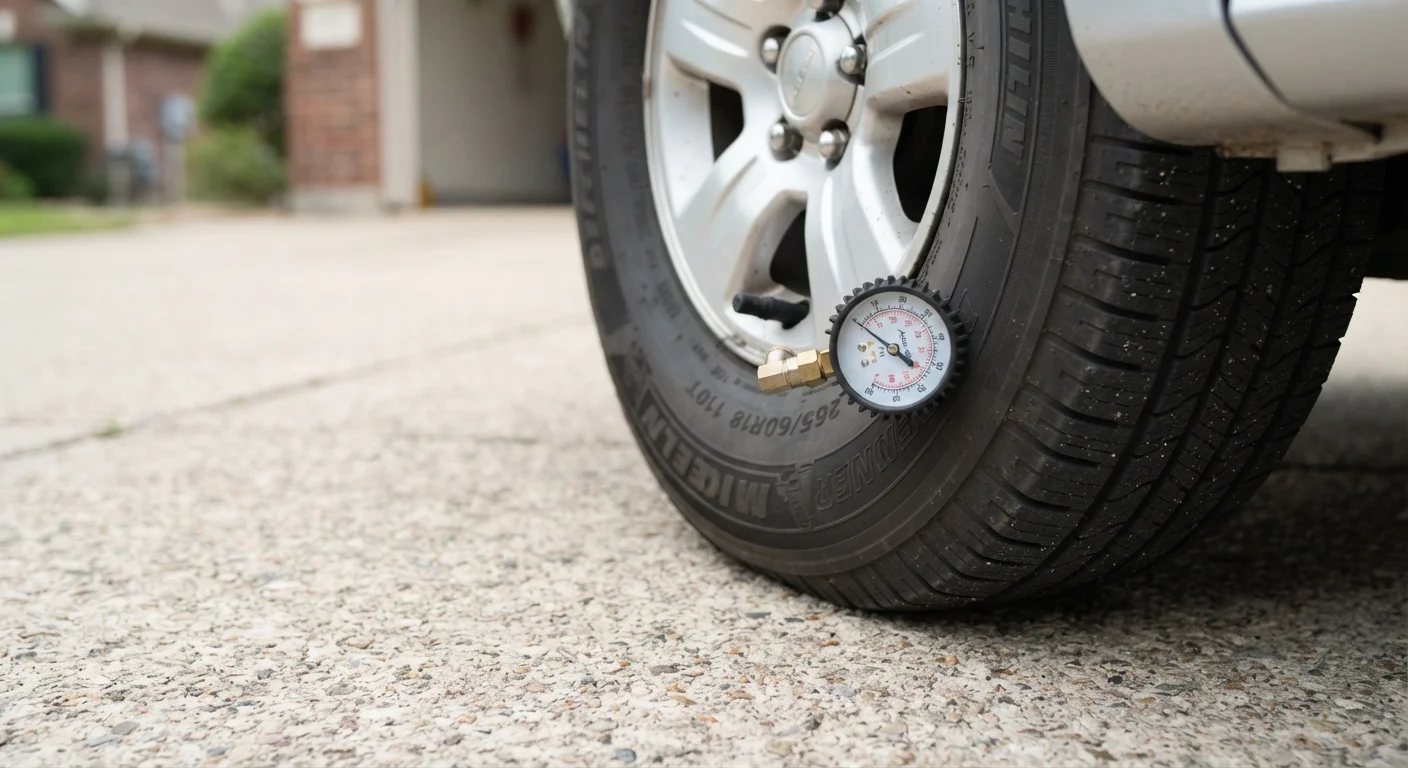
Tire pressure is measured in PSI (pounds per square inch). Running tires underinflated causes the outer edges of the tread to wear faster and generates excess heat, which degrades the tire's internal structure over time. Overinflation concentrates wear in the center of the tread and reduces the tire's contact patch with the road, affecting handling.
The correct pressure for your vehicle is on the driver's door jamb sticker or in the owner's manual. It is not the number stamped on the tire sidewall, which is the maximum the tire can hold under any circumstance. These two numbers are often different, and using the sidewall figure as a target can lead to overinflation.
Pressure should be checked when the tires are cold, meaning the vehicle has not been driven for at least three hours. Heat from driving temporarily raises pressure readings. Temperature swings between seasons also shift pressure, so checking more frequently in fall and spring makes sense. Seasonal vehicle prep covers this and other cold-weather adjustments in more detail.
Tread depth: how to check it and when to act
Tread depth determines how well a tire channels water away from the contact patch. As tread wears down, wet-road stopping distances increase. Most US states set the legal minimum at 2/32 of an inch, but many mechanics and safety organizations suggest replacing tires at 4/32 of an inch because wet braking performance deteriorates noticeably between those two measurements.
The coin tests are a quick way to gauge where you stand. Insert a penny into the tread groove with Lincoln's head pointing into the tire. If the top of his head is visible, the tread is at or below 2/32 of an inch. A quarter used the same way shows 4/32 of an inch. Inexpensive tread-depth gauges, available at auto parts stores, give a more precise reading for a few dollars.
Check tread in multiple grooves across the tire. Uneven wear, where one edge is significantly more worn than the other, can point to inflation problems or alignment issues worth addressing separately. Habits that extend vehicle life include catching these patterns early before they require an unplanned tire purchase.
PSI
Pounds per square inch, the unit used to measure how much air pressure is inside a tire.
Tread depth
The measurement from the top of the tire's rubber tread down to the base of the grooves. More depth means better water evacuation and grip.
Rotation
Moving each tire to a different position on the vehicle on a regular schedule so that wear spreads more evenly across all four tires.
Contact patch
The small area of the tire actually touching the road at any given moment. Proper inflation and tread depth keep this area working as intended.
Rolling resistance
The force a tire must overcome to keep rolling. Underinflated tires have higher rolling resistance, which uses more fuel.
Putting it all together
None of these tasks is complicated, and none requires expensive equipment. A tire gauge, periodic visual checks, and an oil-change appointment that includes a rotation covers most of what the average family vehicle needs.
The practical approach is to build a short checklist: check pressure once a month and before any long trip, request a rotation every 5,000 to 7,500 miles, and do a quick tread check every time you check the pressure. This takes under five minutes total and catches problems before they become safety or cost issues.
Common maintenance myths sometimes lead drivers to over-service or under-service their vehicles. For tires specifically, the evidence is straightforward: consistent attention to pressure and rotation extends tread life, and monitoring tread depth prevents driving on tires that are past their safe limit.