

Key Takeaways
Why habits matter more than any single repair
Most vehicles that reach 200,000 miles or more do so because of consistent, low-cost habits, not because of luck or expensive repairs. A family that stays on top of small tasks avoids the compounding effect where neglected maintenance turns a $30 problem into a $1,200 one. The full picture of car ownership costs goes well beyond the monthly payment, and the habits below address the categories where families lose the most money.
None of these practices require mechanical skill. They require only attention and a rough schedule.
Follow your owner's manual service intervals, not the sticker on the windshield.
Quick-lube shops often apply a conservative 3,000-mile oil change sticker regardless of your vehicle's actual needs. Most modern vehicles with synthetic oil specify 5,000 to 10,000 miles between changes. Following the manual prevents unnecessary spending and ensures you are using the right oil type for your engine.
Let the engine warm up by driving gently for the first few minutes, not by idling.
Modern fuel-injected engines reach operating temperature faster under light load than they do sitting still. Extended idling wastes fuel and can wash cylinder walls with unburned fuel in older engines. A slow, easy start for the first mile or two is enough.
Check tire pressure monthly and before any long drive.
Tires lose roughly one PSI per month in normal conditions and can lose more as temperatures drop. Underinflated tires wear unevenly, reduce fuel economy, and handle poorly in emergency situations. A correctly inflated tire lasts noticeably longer than one that runs soft.
Rotate tires every 5,000 to 7,500 miles.
Front tires on most front-wheel-drive vehicles wear faster than rear tires because they handle both steering and power. Rotating them on schedule evens out wear across all four tires, extending the life of the full set.
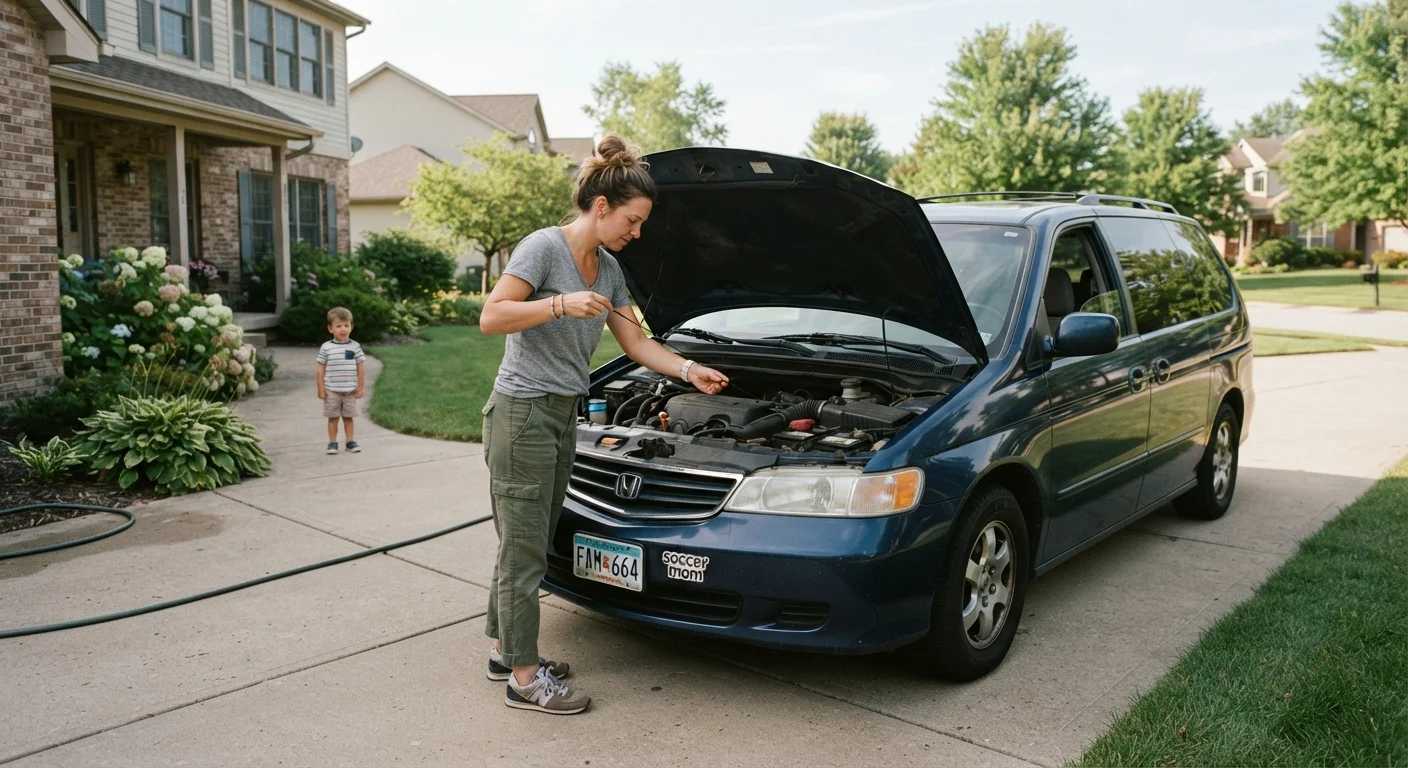
Inspect fluid levels, including coolant and brake fluid, every few months.
Low coolant causes overheating, which is one of the fastest ways to damage an engine. Brake fluid absorbs moisture over time, lowering its boiling point and degrading braking performance. Neither check requires a mechanic.
Brake gently and accelerate smoothly to reduce wear on multiple systems at once.
Hard braking accelerates brake pad wear and stresses rotors. Hard acceleration puts strain on the transmission, axles, and tires simultaneously. Smoother driving habits extend the life of all these components and improve fuel economy.
The daily and weekly habits that do the most work
Most vehicle wear happens in patterns tied to how a car is driven, not just how far. A few minutes of attention each week costs nothing and prevents the kinds of failures that sideline a family on a Tuesday morning.
If you want to understand which scheduled services are genuinely urgent and which can wait a few hundred miles, reading your maintenance schedule closely helps clarify the difference.
Connecting vehicle longevity to the family budget
A car that lasts three extra years saves a family the equivalent of a down payment on the next vehicle. That math changes how it feels to spend $80 on a tire rotation or $25 on a cabin air filter. These are not expenses, they are deferred purchases of future reliability.
Incorporating car maintenance into a monthly planning routine, similar to the approach in monthly financial habits for families, makes it easier to catch gaps before they become costly. Set a calendar reminder tied to your oil change interval and use that same moment to check tires, fluids, and wipers.
One habit that pays off consistently is keeping a simple maintenance log. A notes app or a folded sheet in the glove box works fine. Recording the date, mileage, and service done gives you a clear picture of what is overdue and supports resale value if you sell the vehicle. Buyers and dealers both take better-documented cars more seriously. You can also cross-check your records against common misconceptions using a resource like common car maintenance myths.
Seasons change what a vehicle needs. Batteries, tires, and fluids all behave differently in extreme heat or cold. A quick seasonal review, covered in detail in seasonal vehicle prep, can prevent the kind of breakdown that happens on the coldest morning of the year.
This article provides general vehicle care information for educational purposes. For repairs involving safety systems, unusual noises, or warning lights, consult a qualified mechanic before driving further.