

Key Takeaways
The math behind deferred maintenance
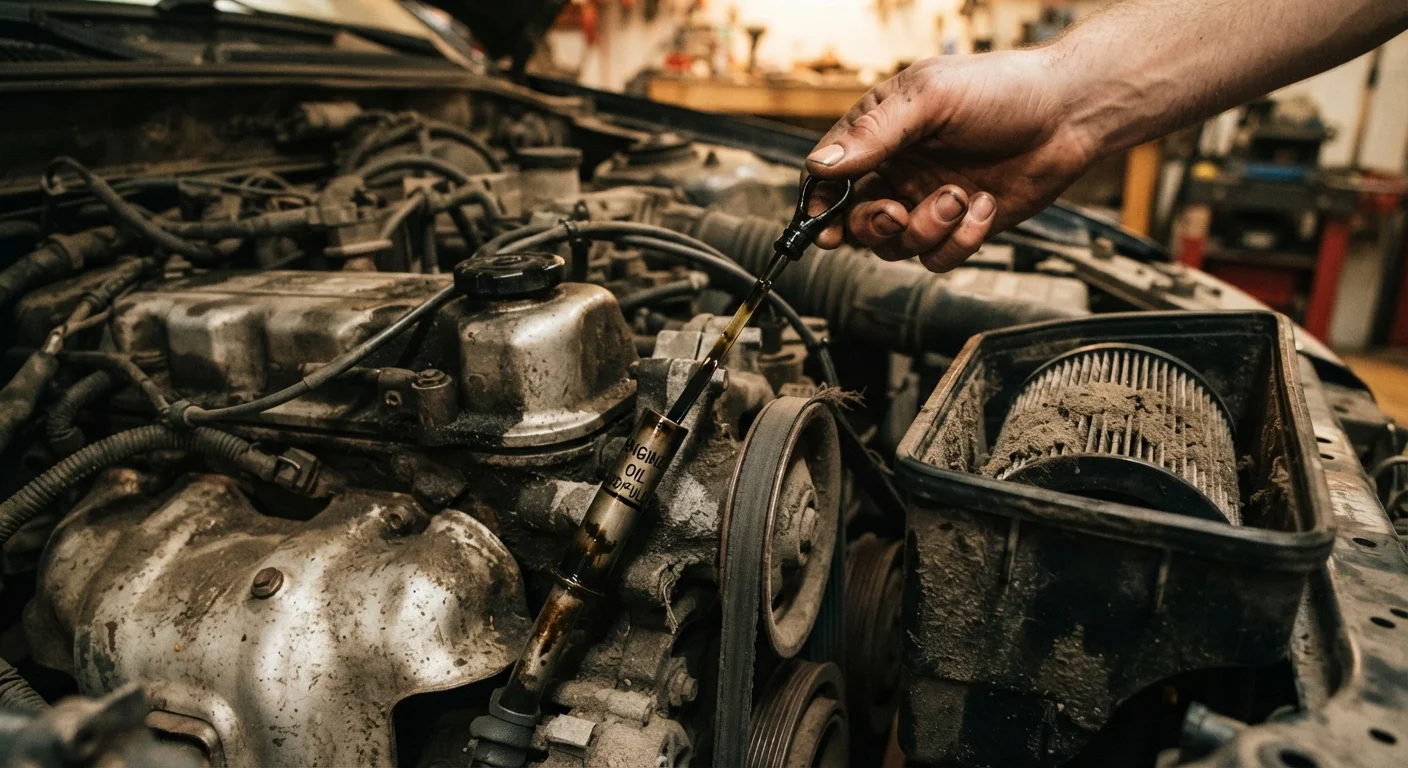
Routine maintenance feels like a cost. In practice, it is closer to insurance against much larger bills. An oil change typically runs between $40 and $100 depending on oil type and where the work is done. A seized engine from oil neglect can cost $4,000 or more to replace. The math is not complicated, but it is easy to ignore when the car seems to be running fine today.
The problem is that internal damage accumulates quietly. By the time a warning light appears or a noise becomes impossible to ignore, the damage is already done. Families who track their total vehicle spending over several years consistently find that deferred maintenance sits near the top of unplanned expenses. For a fuller picture of ongoing vehicle costs, see the car ownership costs most families forget to budget for.
Skipping oil changes because the car seems to be running normally.
Why it happens: Oil looks fine on the dipstick long after it has lost its ability to protect engine components, so there is no obvious signal to act on.
Ignoring the brake system until performance becomes noticeably poor.
Why it happens: Brakes degrade gradually, and drivers adjust to the change without realizing it. Squealing is often dismissed as temporary.
Postponing transmission fluid changes because no warning light appears.
Why it happens: Transmission fluid degradation produces no dramatic symptoms until the damage is already significant, and the service interval is long enough that it falls off the radar.
Skipping tire rotations to save time or money on a tight month.
Why it happens: Tire wear is invisible at highway speed, and rotations feel optional when tires still look functional.
Neglecting coolant flushes until the cooling system fails.
Why it happens: Coolant looks clean long after its protective additives have worn out, and there is no dashboard warning for degraded coolant chemistry.
Where neglect hits hardest
Not all skipped maintenance carries equal risk. Some items degrade slowly and give plenty of warning. Others fail suddenly and take expensive components with them.
$4,000+
Typical engine replacement cost from oil neglect
According to repair cost data compiled by automotive service organizations, engine replacement from oil-related damage commonly exceeds $4,000 on most family vehicles.
$1,500-$5,000
Cost range for automatic transmission repair or replacement
Transmission repair estimates from the American Automobile Association and independent repair shops place the range between $1,500 and over $5,000 depending on vehicle make and damage extent.
$100-$150
Average shop cost for a coolant flush
Coolant flush pricing at independent and chain repair shops generally falls in this range, a fraction of the cost of cooling system damage it helps prevent.
Transmission fluid is one of the costliest areas of neglect. Automatic transmission repairs typically run $1,500 to $4,000, and a full replacement can exceed $5,000. The fluid itself costs around $100 to change at a shop, and many vehicles go 30,000 to 60,000 miles between recommended intervals. Skipping even one change in a high-mileage vehicle raises the failure risk considerably.
Coolant (antifreeze) is another area where small neglect produces large damage. Degraded coolant loses its ability to prevent corrosion inside the cooling system. A corroded radiator or a warped cylinder head from overheating can cost $1,000 to $3,000 or more to address. Coolant flushes generally cost $100 to $150 at a shop, and some families go years without one. For those who want to understand which fluid checks are safe to handle without a mechanic, this guide on fluid checks covers the practical details.
Tire rotation and alignment are often postponed because tires look fine to the naked eye. Uneven wear from skipped rotations shortens tire life, and a set of four tires costs $400 to $900 for most family vehicles. Alignment issues also strain suspension components, which carry their own repair costs. It is worth separating genuine maintenance needs from inflated service recommendations. Common car maintenance myths covers where the industry sometimes oversells.
Brake neglect is a safety issue, not just a cost issue
Worn brake pads and damaged rotors reduce stopping distance, which creates real risk for passengers and other drivers. If you hear grinding, feel pulsing in the brake pedal, or notice the vehicle pulling to one side under braking, have the brakes inspected promptly by a qualified mechanic. Do not defer this service.
Building consistent habits is the most reliable way to avoid these costs. Habits that extend the life of any car offers a practical starting point for families who want to get more years from their current vehicle.