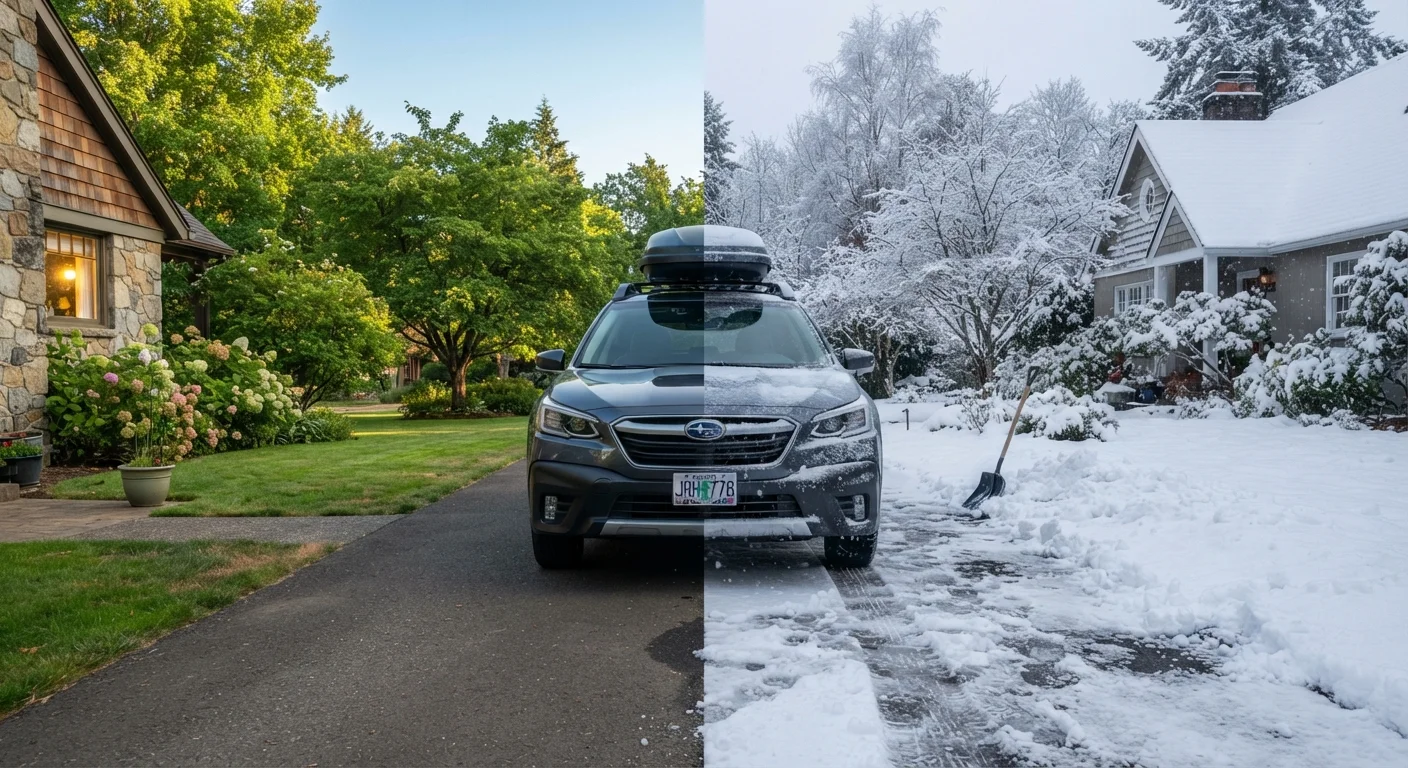
Tires, battery, and fluids are the three areas most affected by seasonal temperature swings.
A cold battery can fail to start a car that ran fine all summer; testing it before winter is worth the effort.
Tire pressure drops roughly one PSI for every 10-degree Fahrenheit drop in outside temperature.
Windshield washer fluid rated for freezing temperatures is one of the cheapest, most overlooked winter prep items.
Summer heat accelerates coolant and oil breakdown, making fluid checks equally important before warm months.
Working through this checklist twice a year can help catch small problems before they become costly repairs.
30–60 min
Summary
18 items · 30 to 60 minutes
Why seasonal prep matters for family budgets
Most vehicle breakdowns are not random. They cluster around two predictable windows: the first cold snap of fall and the first serious heat of late spring. Both extremes stress the same basic systems, just in opposite directions. A little attention before each season shift catches problems while they are still cheap to fix.
This checklist covers the changes worth making as you move into summer and into winter. Some items apply to both seasons. Others are specific to heat or cold. Work through the groups that match your upcoming season and note anything that needs a shop visit before conditions change. For a broader view of how regular habits protect a vehicle over time, see our guide to habits that extend vehicle life.
Tires
Check tire pressure with a gauge and inflate to the vehicle manufacturer's specification (found on the door jamb sticker, not the tire sidewall). Do this when tires are cold, before driving.Must
Inspect tread depth on all four tires using a quarter: if you can see the top of Washington's head, the tires are worn and should be replaced before winter weather.Must
If you run a separate set of winter tires, schedule the swap when daily temperatures drop consistently below 45 degrees Fahrenheit, since all-season rubber stiffens and loses grip below that threshold.Should
Inspect tire sidewalls for cracking, bulges, or embedded objects, which are more common after summer heat cycles.Should
Battery
Have the battery load-tested at a shop or auto parts store before the first cold stretch. Cold temperatures reduce battery capacity, and a battery that reads adequate voltage in summer can fail to start a car at 20 degrees Fahrenheit.Must
Clean visible corrosion from battery terminals using a mixture of baking soda and water, then rinse and dry. Corroded terminals increase resistance and can prevent a full charge.Should
Check that battery hold-down hardware is secure, since vibration accelerates internal wear.Nice to have
Fluids
Check coolant (antifreeze) level and, if possible, test its freeze protection rating with an inexpensive coolant tester. A 50/50 mix of coolant and distilled water typically protects to around -35 degrees Fahrenheit.Must
Replace windshield washer fluid with a formula rated for freezing temperatures before winter. Summer formulas freeze solid in the reservoir and can crack the pump.Must
Check engine oil level and color. In summer, high under-hood temperatures accelerate oil breakdown; in winter, thicker oil in extremely cold conditions can slow lubrication on startup.Must
Inspect brake fluid level in the reservoir. Brake fluid absorbs moisture over time, which lowers its boiling point and can affect pedal feel in both heat and cold.Should
Visibility and lighting
Replace wiper blades if they streak or skip. Winter wiper blades have a rubber boot that prevents ice from clogging the blade frame, so consider switching before the first freeze.Must
Test all exterior lights including headlights, taillights, brake lights, and turn signals. Days are shorter in winter, making burned-out bulbs a safety issue that is also a ticketing risk.Must
Clean the inside of all windows to remove film buildup, which becomes a significant glare source during low winter sun angles.Should
Emergency supplies (seasonal swap)
Pack a winter kit that includes an ice scraper, a small snow brush, jumper cables or a portable jump starter, a blanket, and sand or kitty litter for traction.Must
Replace the winter kit with a summer version before warm months: add sunscreen, extra water, a basic first-aid kit, and a reflective emergency triangle.Should
Verify that your spare tire is properly inflated. Spare tires lose pressure over months of sitting unused.Must
What to bring and how to use this checklist
You do not need specialized tools for most of these checks. A tire pressure gauge, a flashlight, and your owner's manual cover the majority of items. For fluid checks, our fluid inspection guide explains which tasks are safe for a careful non-mechanic and which genuinely need a trained hand.
Required
Tire pressure gauge
Measures tire inflation so you can bring each tire to the manufacturer's specified PSI.
Required
Coolant tester (hydrometer or test strips)
Checks the freeze protection level of your coolant mixture to confirm it will handle winter temperatures.
Required
Flashlight
Lets you inspect battery terminals, fluid reservoirs, and tire sidewalls clearly, especially in a dim garage.
Required
Owner's manual
Provides the manufacturer's specifications for tire pressure, fluid types, and service intervals specific to your vehicle.
Optional
Portable jump starter
Gives you a self-contained way to restart a dead battery without needing another vehicle nearby.
Work through each group in order. If you find something outside the normal range, write it down before moving on. A short list at the end is easier to bring to a mechanic than a vague memory. For tire-specific details on inflation, tread depth, and rotation schedules, the tire care overview covers the numbers clearly.
Know when to stop and call a mechanic
Several items on this checklist, including battery load testing and brake system inspection, are worth having a qualified mechanic verify if you see anything outside the normal range. Do not delay brake-related concerns. A visual check of fluid level is not a substitute for a brake system inspection if you notice a soft pedal, pulling, or unusual noise.
If you are planning a road trip around a season change, combining this checklist with a pre-trip budget checklist can help you catch both vehicle and cost surprises before you leave.
Affordable Car Care Editorial Team is the collective byline for our editorial team and contributor network. Articles published under this byline or an editorial pen name are researched, written, and reviewed according to our editorial standards for clarity, consistency, and independence before publication.
Disclaimer: The content provided on our blog site traverses numerous categories, offering readers valuable and practical information. Readers can use the editorial team’s research and data to gain more insights into their topics of interest. However, they are requested not to treat the articles as conclusive. The website team cannot be held responsible for differences in data or inaccuracies found across other platforms. Please also note that the site might also miss out on various schemes and offers available that the readers may find more beneficial than the ones we cover.