

Key Takeaways
Start here
Why most beginners give up too soon
Next
Start with a spending baseline, not a coupon stack
Build on it
The core habits that move the needle
Go deeper
How seasonal timing affects what you pay
Avoid pitfalls
Common beginner mistakes to skip past
Why most beginners give up too soon
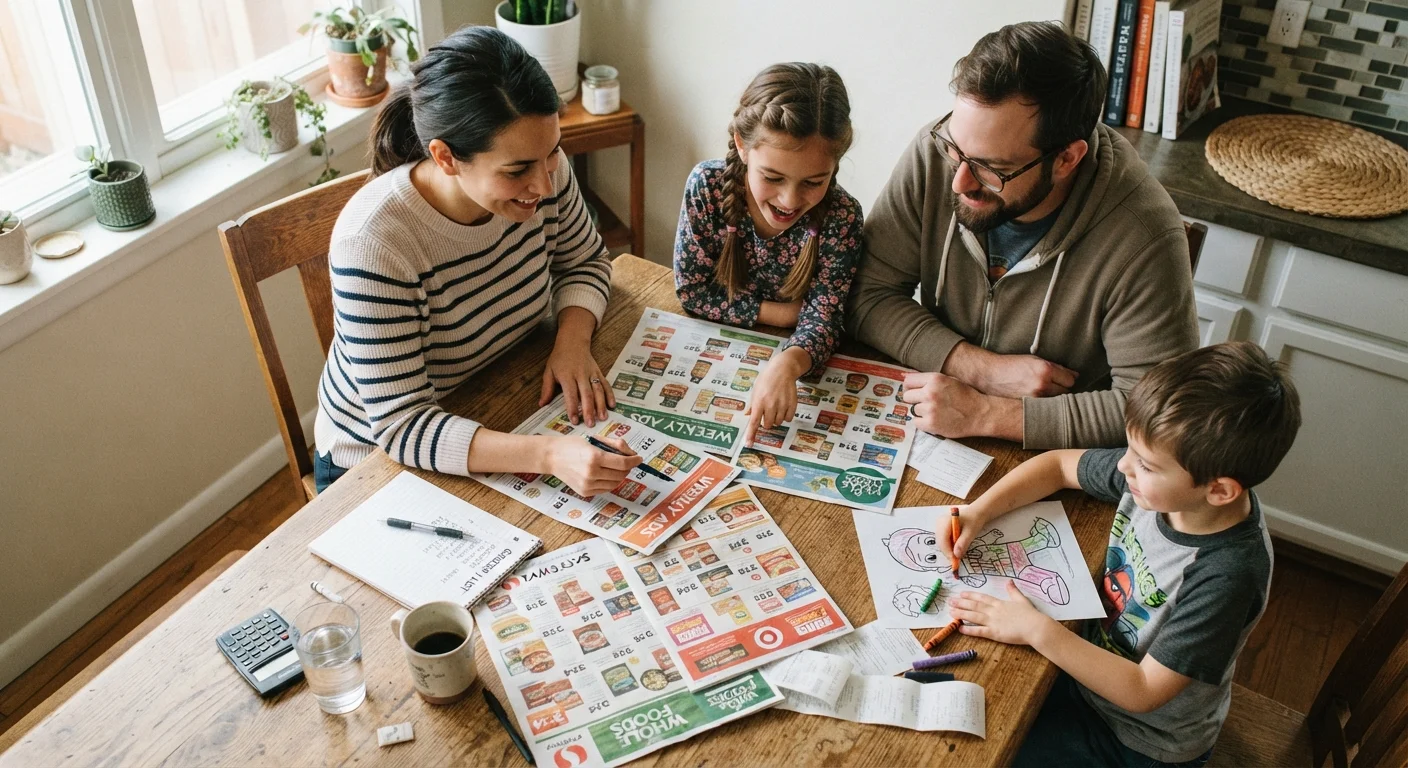
Frugal shopping gets presented as a system requiring binders of coupons, multiple store trips, and hours of prep. That image discourages families before they start, and it also misrepresents how modest, consistent effort actually produces savings.
The gap between expectation and reality is the main reason beginners quit. They attempt a full coupon strategy on the first try, find it time-consuming and confusing, and conclude that frugal shopping simply doesn't work for their household. What they have actually discovered is that doing too much at once doesn't work.
The families who sustain savings long-term generally start with two or three habits, repeat them until they feel automatic, then add one more. That progression matters more than the specific tools they use.
Pick one category to practice on first
Groceries are a practical starting point because most families shop for them weekly, which means you get frequent practice and fast feedback. Once the habits feel natural for groceries, applying them to clothing or household goods is much easier.
Start with a spending baseline, not a coupon stack
Before any discount tactic can help, you need to know what your family normally pays for the things you regularly buy. Without that reference point, there is no way to tell whether a sale price is genuinely lower or just regular pricing with a promotional label.
A spending baseline doesn't require elaborate software. Keeping two or three months of grocery and household receipts, then calculating an average weekly total by category, is enough. That number becomes your comparison point.
The family budget planner covers how to map spending categories before you start shopping, which gives this baseline a clear structure. Once you have it, spotting a real price drop becomes straightforward rather than guesswork.
Unit price
The cost of a product expressed per standard unit of measure, such as per ounce or per count. It appears on most store shelf tags and lets you compare different package sizes on equal footing.
Spending baseline
Your household's typical cost for a category of purchases over a set period. It gives you a reference point to judge whether a sale price is actually lower than normal.
Price cycle
The predictable pattern of price increases and decreases that happens with many product categories across seasons, holidays, and inventory periods.
Loyalty program
A store membership that gives card or app holders access to member-only pricing and, sometimes, points or rewards on purchases. Enrollment is typically free but may involve sharing purchase data.
Cashback rebate
A partial refund on a purchase, usually received after submitting a receipt through an app or mailing in a form. The refund arrives after the purchase, not at the point of sale.
The core habits that move the needle
A short list of repeatable habits drives the majority of savings for most families. These are not complex tactics; they are decisions made before and during each shopping trip.
- Write the list first, then check deals. Looking at circulars before the list is written lets promotions shape what you buy rather than your actual needs.
- Compare unit prices. The shelf tag unit price (cost per ounce, per count) is a more reliable guide than the total package price.
- Use one store's loyalty program at the store you already visit most. Loyalty pricing at a store you already use costs nothing extra in time or travel. See a balanced view in this piece on grocery store loyalty programs.
- Track one or two high-frequency items. Knowing the normal price of milk, ground beef, or laundry detergent in your area makes it easy to recognize a genuine sale without tracking dozens of products.
For families ready to go further, coupons, cashback, and promo codes explains how each discount tool works and what it actually saves.
How seasonal timing affects what you pay
Retailers reduce prices on predictable schedules tied to seasons, holidays, and inventory cycles. Families who shop ahead of genuine needs can take advantage of these cycles without scrambling.
A few durable patterns worth knowing:
- Clothing prices drop at the end of each season as stores clear inventory for the next one.
- Outdoor furniture and grills typically see their lowest prices in late summer and fall.
- Bedding, towels, and home textiles often go on promotion in January and around major summer holidays.
- Non-perishable pantry staples frequently go on sale before major cooking holidays, but prices on fresh ingredients can spike at the same time.
The same principle applies to travel. Families planning ahead can find lower prices on flights and lodging during shoulder seasons rather than peak travel periods. The budget family vacation walkthrough covers how to time travel spending effectively.
Common beginner mistakes to skip past
A handful of errors show up repeatedly among families who are new to intentional shopping. Recognizing them in advance saves time and frustration.
Buying something solely because it's discounted. A sale price on something your family wouldn't otherwise buy is still spending, not saving. The list-first habit above prevents most of this.
Combining too many discounts at once. Stacking coupons, cashback offers, and promotional codes can backfire when terms conflict or a coupon gets declined at checkout. Why stacking discounts can backfire covers the specific points where this goes wrong.
Bulk buying everything without checking storage or usage rate. Buying in bulk lowers per-unit cost, but only if your family actually uses the product before it expires or goes stale. The bulk versus as-needed trade-off walks through which situations favor each approach.
Frugal shopping built on a few solid habits, applied consistently, produces more reliable results than any single tactic used intensively and then abandoned.