

Key Takeaways
Why the exterior deserves your attention first
The outside of a home is what neighbors see every day and what potential buyers notice before they step through the door. Yet most families put exterior upkeep last, behind interior repairs and appliances. That order makes sense when a roof or furnace needs attention, but when the structure is sound, a few targeted exterior projects can change the whole feel of a property for a fraction of what interior renovations cost.
The projects below are ordered by impact relative to effort. None requires hiring a contractor, and most can be done over a weekend or two. For tasks that touch electrical fixtures, gas lines, or structural elements, always check local permit requirements and consult a licensed professional. The suggestions here stay in the lane of surface-level and landscaping work that most homeowners can handle safely.
If you are already comfortable tackling indoor projects, see small fixes with an outsized impact for similar thinking applied inside the house.
Pressure wash every surface before anything else
Mold, algae, and years of oxidation make concrete, siding, and fences look far older than they are. A gas or electric pressure washer removes that buildup in a few hours, and the result often looks like a fresh surface without any paint or replacement. Driveways, walkways, vinyl siding, brick, and wood fences all respond well. Rent a machine if you do not already own one: most rental outlets charge by the day at a fraction of the purchase price.
Keep the nozzle moving and hold it at an angle to avoid gouging wood or forcing water under siding. Do not use a pressure washer on window screens, light fixtures, or electrical outlets. Let surfaces dry fully before applying any paint or sealant.
Pressure washing alone can make a driveway or fence look years newer at minimal cost.
Paint or refinish the front door
The front door is the focal point of the facade. A faded, scratched, or dated door color is easy to fix with a quart of exterior paint, a small foam roller, and a brush for trim detail. Sand lightly first, wipe off dust, and apply two thin coats. Semi-gloss or gloss sheens hold up better outside and are easier to wipe clean.
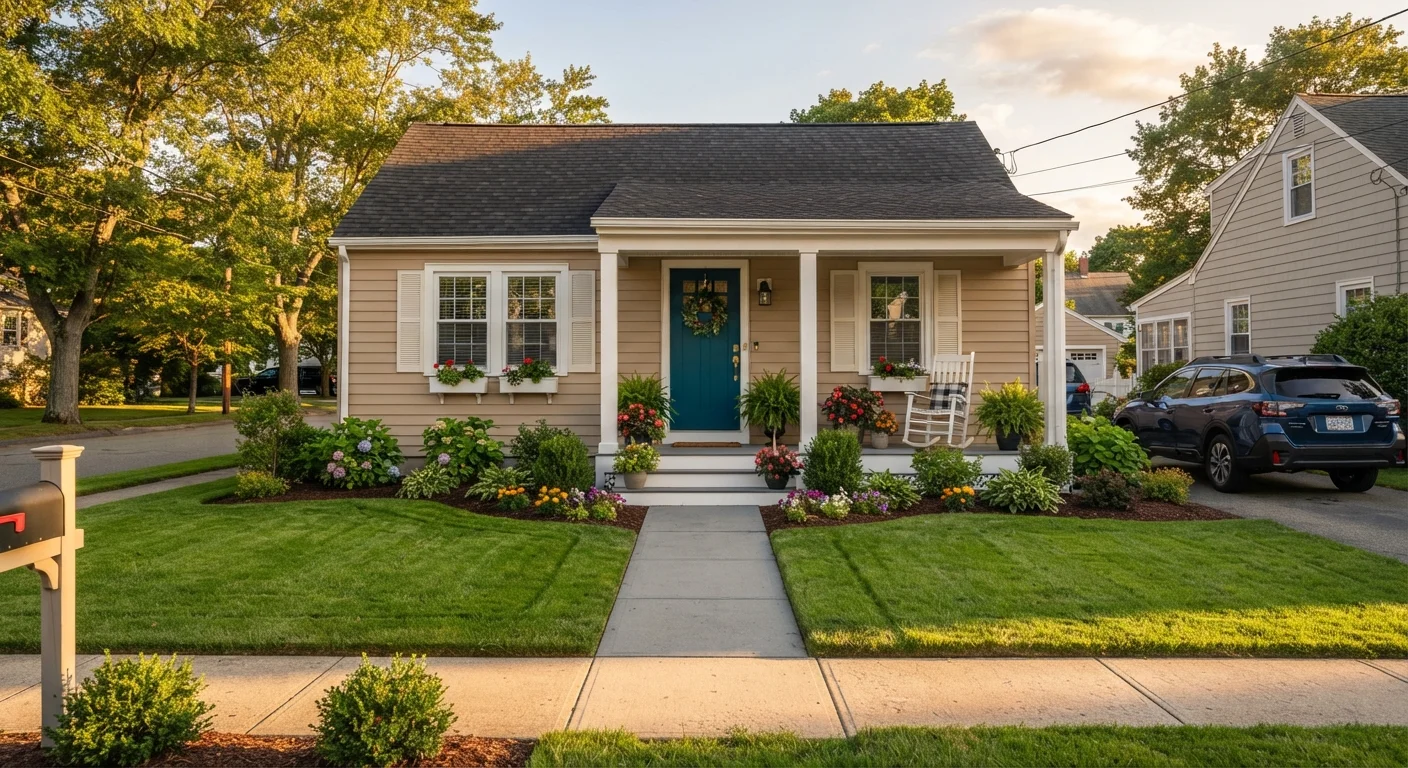
Dark, saturated colors like navy, forest green, and black have remained popular for a reason: they read as intentional and well-maintained even on modest homes. If hardware like the door handle, knocker, or house numbers is tarnished or mismatched, spray paint designed for metal surfaces gives a consistent finish at low cost. See DIY painting techniques that look professional for prep steps that also apply outdoors.
A single quart of exterior paint and a weekend afternoon can transform a front entry.
Edge lawn borders and define garden beds
Undefined edges between grass, paths, and planting beds make a yard look neglected regardless of how healthy the plants are. A manual half-moon edger or a string trimmer with an edging attachment cuts a clean line along driveways, walkways, and bed borders. Do this once, then maintain the line every few weeks with a string trimmer pass.
After edging, pull weeds from beds and apply two to three inches of shredded bark or wood chip mulch. Mulch suppresses weeds, retains moisture, and gives beds a consistent, finished appearance. Buying mulch in bulk by the cubic yard from a landscaping supplier typically costs less per unit than buying bagged mulch from a home improvement store, especially for larger areas.
Clean edges between grass and beds do more for a yard's appearance than most new plantings.
Replace or repaint house numbers and mailbox
House numbers that are faded, crooked, or obscured by overgrowth are a small detail with a disproportionate effect. Clear, visible numbers also matter for mail delivery and emergency services. Modern address plaques in brushed metal or bold contrasting colors cost little and install with basic hardware. If the mailbox post is solid but the box itself is rusted or dented, replacing just the box is inexpensive.
Position numbers where they are visible from the street, with adequate contrast against the mounting surface. Many neighborhoods and municipalities have specific requirements for address visibility: verify local rules before making changes.
Visible, well-mounted house numbers improve both appearance and practical address clarity.
Plant perennials and natives instead of annuals
Annual flowers look good for a season and then require full replacement. Perennials come back each year; native perennials often thrive with minimal watering once established, because they are suited to local soil and rainfall patterns. Over two or three seasons, perennials cost less per year of bloom than annuals replanted each spring.
Select plants suited to your USDA hardiness zone and the light conditions of each bed. Contact your local cooperative extension office for no-cost advice on what natives grow well in your county. Many extension programs also hold plant swaps where community members trade divisions of established perennials at no cost.
Native perennials cost less per season than annuals and need less water once established.
Repair and repaint fences, shutters, and trim
Peeling paint on a fence or shutters draws the eye in the wrong direction. Before repainting, scrape loose paint, sand rough areas, and apply a coat of exterior primer to bare wood. Then paint with a brush for best adhesion on textured surfaces. Two thin coats outlast one thick one.
Check that shutters are actually mounted straight and are the correct width for the windows they frame. Shutters that are too narrow or that hang at a slight angle undermine the look of an otherwise tidy facade. Replace missing shutter hardware rather than leaving empty screw holes. Loose or rotten fence boards should be repaired or replaced before painting: paint over compromised wood will not hold.
Scraped, primed, and repainted trim lasts years longer than a quick coat over peeling paint.
Add or improve exterior lighting
Porch lights and path lighting that are dated, dim, or non-functional make a home look uncared for at night. Solar-powered path lights require no wiring and install by pushing a stake into the ground. For porch and entry lights, replacing a fixture is straightforward if you are comfortable with basic electrical work, but turn off the breaker first and verify the wiring is safe before proceeding. If you have any doubt about the wiring condition, have a licensed electrician assess the circuit before you replace the fixture.
Choose fixtures with a finish that matches your door hardware and house numbers for a consistent look. Warm-white bulbs (around 2700K color temperature) give a welcoming appearance compared to cooler tones.
Consistent exterior lighting fixtures give a home a finished appearance after dark.
Planning before you spend
Walk your property on a bright morning and photograph every area you want to improve. Looking at photos is easier than trusting memory when you are standing in a hardware store aisle. Prioritize repairs over additions: a chipped walkway or rotting window trim matters more than a new planter box. Fix what is broken, then layer in improvements.
For tool-heavy projects like pressure washing or post-hole digging, renting may be smarter than buying. See when to rent versus buy tools for a clear breakdown. If your plans include a garden bed, starting a vegetable garden on a small budget covers soil basics and seed costs that apply just as well to ornamental beds. Habits around deal-finding covered in beginner deal-finding for families translate directly to buying mulch, paint, and plants at better prices.
Check neighborhood and HOA rules first
Some homeowners associations have specific rules about paint colors, fence heights, and landscape changes. Before spending money on materials, confirm what is permitted. Many municipalities also require permits for fence replacement or retaining walls above a certain height. A quick check saves time and avoids having to redo work.