
Smart Family Shopping

Before the Back-to-School Rush: A Pre-Season Shopping Checklist for Parents

Share
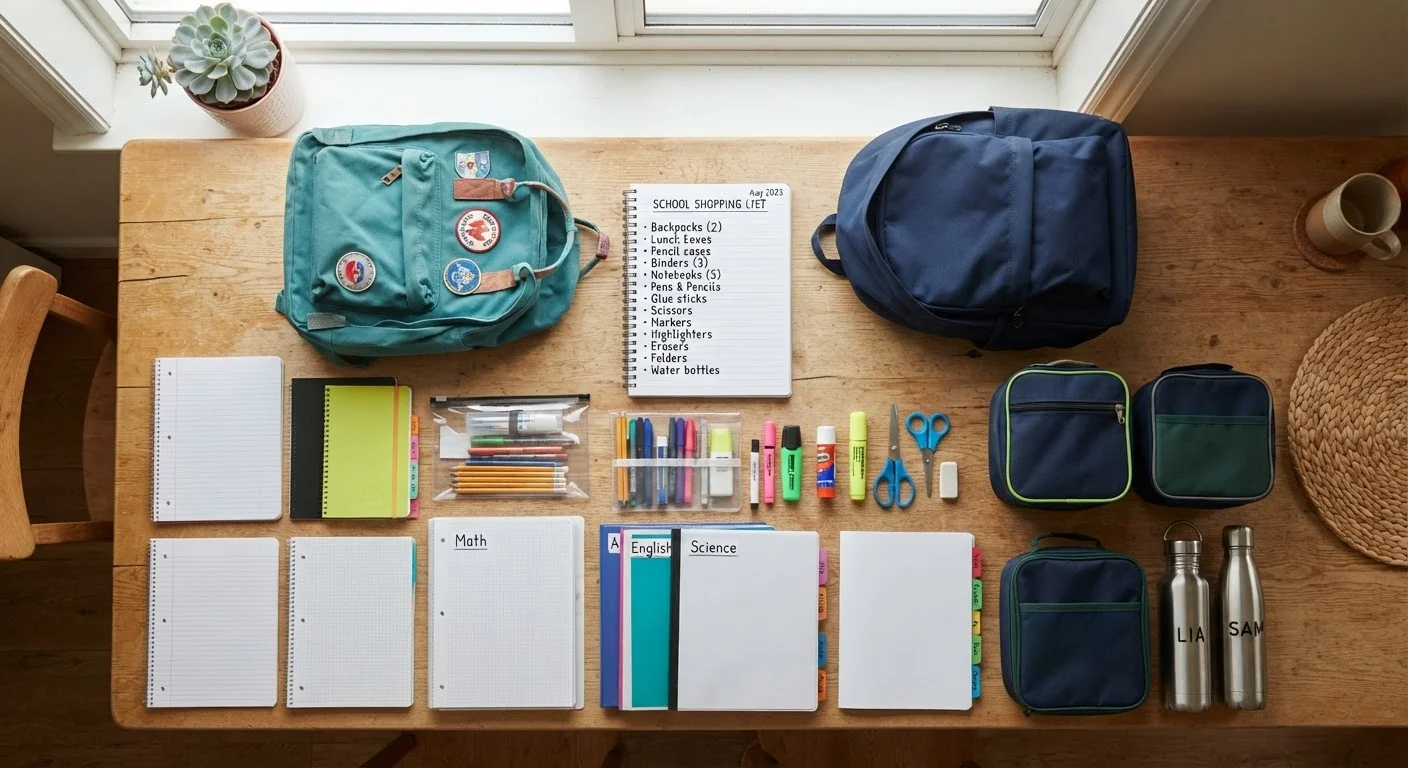
Flat-lay of school supplies, a backpack, and a handwritten shopping checklist on a kitchen table

Key Takeaways

Shopping before peak back-to-school weeks typically means better selection and less pricing pressure.
Taking inventory first prevents duplicate purchases and reveals what genuinely needs replacing.
A written per-child budget set before shopping reduces impulse overspending.
Tax-free weekends and early-season store promotions vary by state, so verify dates locally.
Spreading purchases across a few weeks can ease the impact on a monthly household budget.
30–60 min

Summary

22 items · 30 to 60 minutes

Why shopping early matters for your family budget

Back-to-school spending is one of the largest annual retail events in the United States. Families who wait until the final two weeks before school starts often face thinned-out inventory, crowded stores, and prices that reflect peak demand. Shopping three to six weeks early tends to give you more control over what you spend and what you actually buy.

This checklist is designed to work alongside a clear household budget. If your family has not mapped out monthly spending categories yet, the family budget planner guide walks through how to do that before any shopping trip begins. Similarly, understanding which categories follow predictable price cycles helps you time purchases well. The seasonal shopping calendar covers when clothing, electronics, and other goods tend to drop in price throughout the year.

Work through each section of this checklist before you set foot in a store or add anything to an online cart.

Tools and records you will need

Before working through the checklist, gather these items. Having them on hand prevents guesswork and repeated trips.

Required

Official school supply list

Confirms exactly what items are required so you buy only what is needed.

Required

Household inventory notes

A written or phone-based list of what you already own that is still usable.

Required

Per-child budget worksheet

Tracks spending by category so you do not exceed your total back-to-school budget.

Optional

State tax-free weekend schedule

Confirms the eligible dates, items, and dollar limits for your state's sales tax holiday if one exists.

Required

Receipt folder or envelope

Holds all purchase receipts until school starts so returns remain possible if items are wrong or unneeded.

The pre-season checklist

Work through the groups below in order. The preparation steps directly shape how useful the later purchasing steps will be.

Inventory and assessment

Pull out last year's backpack, lunch bag, and reusable water bottle and check each for damage, broken zippers, or mold. Must
Go through existing school supplies (pencils, markers, scissors, rulers, folders) and sort into usable versus depleted or broken. Must
Check clothing and shoes for each child, noting what no longer fits and what is still in good condition. Must
Request or download the official supply list from the school or teacher before purchasing anything. Must
Ask older children what items from last year they genuinely used versus what sat unused the entire year. Should

Budget setting

Set a firm total dollar figure for back-to-school spending per child before opening any shopping app or store flyer. Must
Separate the budget into categories: supplies, clothing, footwear, and technology or equipment if applicable. Must
Identify which items are non-negotiable for day one versus items that can wait until later in the semester. Should
Check whether your state's tax-free weekend applies to items on your list and confirm the current year's dates and thresholds with your state's revenue agency. Should

Supply and clothing purchases

Buy only what appears on the official school list, plus items confirmed missing from your inventory check. Must
Compare per-unit costs for consumables (paper, pencils, glue sticks) when buying in larger pack sizes, but only purchase quantities you will realistically use. Should
Size shoes and clothing with the child present, accounting for expected growth when sizing up is practical. Must
Check resale or consignment sources for items that children outgrow quickly, such as winter coats or athletic gear. Nice to have
Label all supplies and clothing with the child's name before the first day to reduce loss. Should

Technology and larger purchases

Confirm with the school whether a device is required, recommended, or prohibited before purchasing any technology. Must
Check whether the child's existing device meets the school's minimum requirements before buying a replacement. Must
Verify whether the school provides software licenses or accounts so you do not pay separately for tools the school already covers. Should
If purchasing a new device, research the school's accepted device types and any IT support limitations before deciding. Should

Final review before purchasing

Cross-reference your full cart or list against the school supply list one more time to catch duplicates or items not required. Must
Confirm the total spend is within the budget set in the earlier step and adjust by removing lower-priority items if needed. Must
Keep all receipts until school starts so items that go unused or do not meet teacher requirements can be returned. Should
Note any items the school requests families supply throughout the year (tissues, hand sanitizer, printer paper) so you can watch for those at favorable prices over time. Nice to have

Avoid shopping from retailer ads alone

Store flyers and email promotions often push items that are not on your child's actual supply list. Buying from an ad before you have the official list in hand is one of the most common ways families overspend on back-to-school shopping. Always obtain the school's list first and treat it as your primary reference, not a retailer's seasonal promotion.

Budgeting and timing considerations

Many states offer a sales tax holiday for school supplies and clothing during a specific weekend in July or August. The eligible items and dollar thresholds vary by state, and not all states participate. Check your state's department of revenue website for current details before planning around a tax-free date.

If one lump purchase would strain your July or August budget, spreading the list across two or three pay periods is a reasonable approach. Prioritize items children cannot start school without, then add the rest as funds allow. This is a different planning challenge from a family trip, but the discipline is similar. The family travel budget checklist illustrates how phasing costs over time can prevent a single event from overwhelming a household budget.

For supply categories where buying in larger quantities makes sense, such as loose-leaf paper, pencils, or folders, compare the per-unit cost against what you actually expect to use before the school year ends. The bulk vs. as-needed buying guide lays out when volume purchasing helps and when it creates storage problems and waste instead.

This article provides general consumer information. It does not constitute financial advice. Consult a qualified financial professional for guidance specific to your household circumstances.

Smart Family Shopping Editorial Team is the collective byline for our editorial team and contributor network. Articles published under this byline or an editorial pen name are researched, written, and reviewed according to our editorial standards for clarity, consistency, and independence before publication.

View all articles by Smart Family Shopping Editorial Team →
Disclaimer: The content provided on our blog site traverses numerous categories, offering readers valuable and practical information. Readers can use the editorial team’s research and data to gain more insights into their topics of interest. However, they are requested not to treat the articles as conclusive. The website team cannot be held responsible for differences in data or inaccuracies found across other platforms. Please also note that the site might also miss out on various schemes and offers available that the readers may find more beneficial than the ones we cover.