

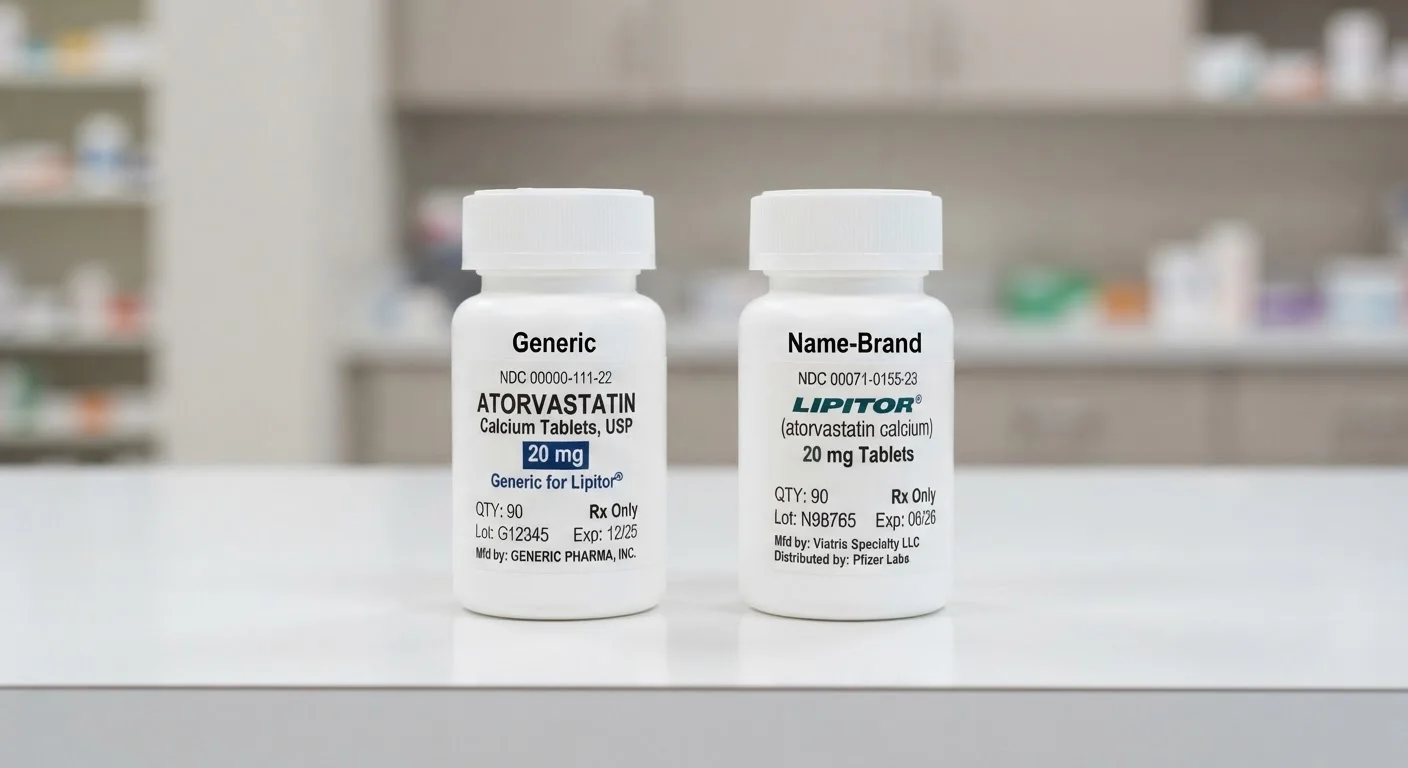
Key Takeaways
Option A
Generic medications
The bioequivalent, lower-cost option approved by the FDA.
Best for: Families and individuals managing ongoing prescriptions on a tight budget.
Option B
Name-brand medications
The original patented formulation with full brand recognition.
Best for: Situations where no approved generic exists or when a specific formulation is medically required.
If you manage a chronic condition with long-term prescriptions
Generic medications
The cost difference compounds over months and years. Generic versions of common maintenance drugs are widely available and meet the same FDA standards.
If your doctor has specified a name-brand formulation for a medical reason
Name-brand medications
Certain drugs with narrow therapeutic windows or specific delivery mechanisms may warrant the branded version. Always follow your prescriber's guidance.
If a generic is not yet available for your medication
Name-brand medications
Patent protection can last up to 20 years, so some drugs simply have no generic alternative yet. Check with your pharmacist periodically as that can change.
What makes a drug 'generic'
A generic medication is a drug that contains the same active ingredient, in the same dose, strength, and dosage form, as an already-approved name-brand product. The FDA's Office of Generic Drugs reviews each application and requires manufacturers to prove bioequivalence: that the generic delivers the active ingredient into the bloodstream at essentially the same rate and to the same extent as the original.
What generics are permitted to change are inactive ingredients, sometimes called excipients. These include fillers, dyes, binders, and coatings. For most people, those differences are irrelevant. For a small subset, particularly those with allergies to specific dyes or additives, they can matter. If you have known sensitivities, tell your pharmacist before switching.
Name-brand drugs carry a brand name because the manufacturer that developed the compound holds a patent, typically lasting up to 20 years from the filing date. During that window, no competitor can sell a generic version. Once the patent expires, other manufacturers may apply to produce and sell the generic, which is why prices drop sharply after that point.
| Criterion | Generic medications | Name-brand medications |
|---|---|---|
| Active ingredient | Identical to brand | Original patented compound |
| FDA approval standard | Bioequivalence required | Full clinical trials required |
| Inactive ingredients | May differ (fillers, dyes) | Original formulation |
| Average cost | 80-85% less than brand | Full retail or insurance price |
| Availability | After patent expiry | During and after patent period |
| Insurance coverage | Usually preferred tier | Higher copay tier, varies by plan |
The real cost difference
According to FDA data, generic drugs cost 80 to 85 percent less than their branded counterparts on average. For a family filling multiple prescriptions each month, that gap is substantial. A drug costing $200 per month as a brand may be available as a generic for $15 to $40 at many pharmacies.
80-85%
Average cost savings with generics
According to the FDA, generic drugs cost 80 to 85 percent less than their brand-name equivalents on average.
90%
Share of U.S. prescriptions filled as generics
The FDA reports that generics account for roughly 90 percent of prescriptions dispensed in the United States.
20 years
Maximum patent protection period
U.S. patent law grants drug manufacturers up to 20 years of exclusivity from the patent filing date, after which generics may enter the market.
Cost variation also exists within generics. Different pharmacy chains and independent pharmacies may price the same generic differently. Many state pharmacy assistance programs and federally qualified health centers offer additional savings on generics for qualifying households. This is general information; for guidance on programs that apply to your situation, consult a licensed healthcare or social services professional.
Families who buy other household staples in bulk may recognize a similar principle at work. The same logic that applies to buying in bulk versus buying as needed applies here: lower per-unit cost does not automatically mean lower total cost unless the purchase matches actual need. Generic medications, however, do not expire quickly, so the cost advantage is more straightforward.
When name-brand may still be appropriate
For most common conditions, including high blood pressure, high cholesterol, type 2 diabetes, and many infections, generics are available and clinically appropriate. However, a few categories warrant more care.
Some medications have what pharmacologists call a narrow therapeutic index. This means the difference between a therapeutic dose and a harmful one is small, and even minor variations in absorption can have clinical consequences. Certain anticoagulants, antiepileptics, and thyroid hormones fall into this category. The FDA still approves generics in these classes, but some prescribers prefer to keep patients stable on the formulation they were originally titrated on. That is a clinical judgment, not a marketing preference, and it should be made by your prescribing clinician.
Extended-release or specialized delivery formulations can also differ between brand and generic versions. If your prescription specifies a particular release mechanism, confirm with your pharmacist that the generic matches that specification before substituting.
This article is for general informational purposes only and does not constitute medical or pharmaceutical advice. Always consult a qualified healthcare professional before making changes to any medication regimen.