

Key Takeaways
Community health center
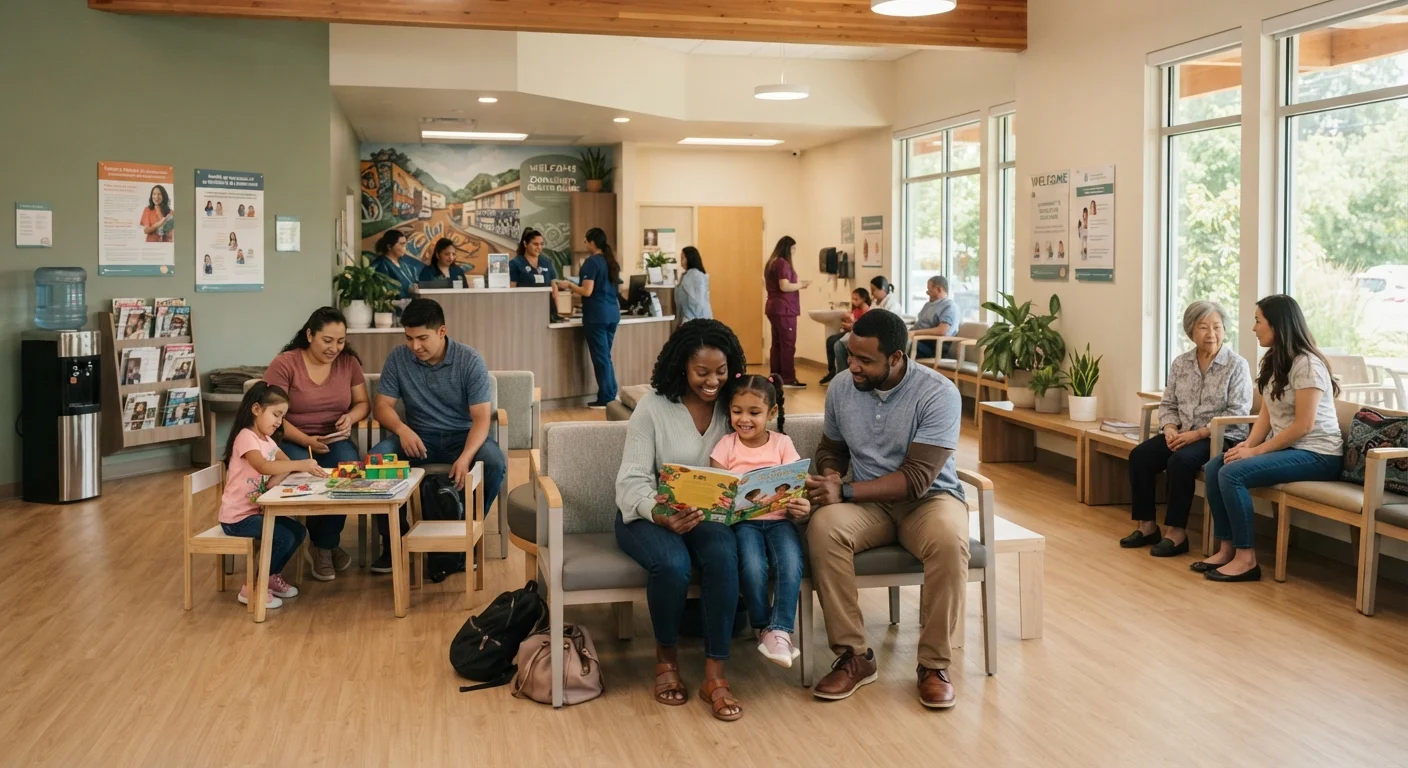
A community health center (also called a Federally Qualified Health Center, or FQHC) is a government-funded clinic that provides primary medical care, dental care, and behavioral health services to anyone who walks in, regardless of insurance status or income. Patients who cannot afford full fees pay on a sliding scale tied to their household income and family size. These clinics are required by federal law to operate in medically underserved areas and to keep care accessible to low-income patients.
FQHC status is granted by the Health Resources and Services Administration (HRSA) and comes with federal grant funding under Section 330 of the Public Health Service Act, plus enhanced Medicaid and Medicare reimbursement rates.
What community health centers actually do
Community health centers are full-service primary care clinics, not emergency rooms or charity programs. A typical FQHC employs physicians, nurse practitioners, dentists, mental health counselors, and social workers under one roof or across a network of sites. Patients can get a routine physical, a cavity filled, a depression screening, and a flu shot at the same location, often on the same day.
Preventive care is a core function. Many of the screenings and immunizations available at an FQHC overlap with what standard insurance plans cover at no cost. Families who want a full picture of no-cost preventive services can review what preventive care families are often entitled to.
Beyond clinical visits, most centers also connect patients with enabling services: transportation assistance, translation, enrollment help for Medicaid or the Children's Health Insurance Program (CHIP), and referrals to food assistance programs. These wraparound services exist because the clinics are designed to address barriers that keep low-income families from getting care in the first place.
1,400+
FQHC organizations operating nationwide
According to HRSA data, these organizations collectively operate more than 14,000 service delivery sites across the United States.
30 million+
Patients served annually by FQHCs
HRSA reports that federally funded health centers serve more than 30 million patients each year, with the majority having incomes at or below the federal poverty level.
62%
Share of FQHC patients at or below poverty level
HRSA's Uniform Data System shows that roughly 62 percent of health center patients have incomes at or below 100 percent of the federal poverty guideline.
Who qualifies and how fees work
There is no formal eligibility test to walk through the door of an FQHC. Federal law requires these centers to serve everyone in their geographic service area, regardless of income, insurance, or citizenship. In practice, the sliding-fee discount is what most low-income and uninsured families care about.
Staff calculate your fee by comparing your total household income to the federal poverty guidelines published each year by the U.S. Department of Health and Human Services. A family of four earning below a certain percentage of the poverty level pays a minimal fee, often a few dollars per visit. Families with moderate incomes pay a higher but still reduced rate. Patients with insurance are billed through that insurer first; the sliding scale then covers any gap.
To apply for the discount, you typically bring documentation of income (recent pay stubs, a tax return, or a benefits letter) and proof of household size. Centers are required to make this process straightforward. If you have no documentation, many centers still work with you on a case-by-case basis rather than turning you away.
This article provides general information only and is not a substitute for advice from a qualified healthcare or legal professional. Income thresholds and available services vary by center and change periodically; contact your local FQHC directly to confirm current terms.
How to find and prepare for your first visit
The HRSA health center finder at findahealthcenter.hrsa.gov lists every federally funded site in the country. Enter your ZIP code and the tool returns nearby locations with addresses, phone numbers, hours, and a summary of services. Some centers operate multiple sites or mobile units in rural counties, so checking the full list for your area is worth the extra minute.
Before your first visit, call ahead to ask about the sliding-fee application process, which documents to bring, and whether the center has same-day appointments. Many FQHCs use electronic health records, so bringing a list of current medications and past diagnoses helps the care team get up to speed quickly.
Children and adults with chronic conditions such as diabetes or asthma often benefit most from establishing care at an FQHC, because care managers at these clinics specialize in coordinating ongoing treatment for patients with limited resources. If you have a specific concern, such as pregnancy, a child's developmental screening, or a mental health need, ask the scheduling staff which provider type handles that need at their site.