

Key Takeaways
Fixed vs. variable expenses
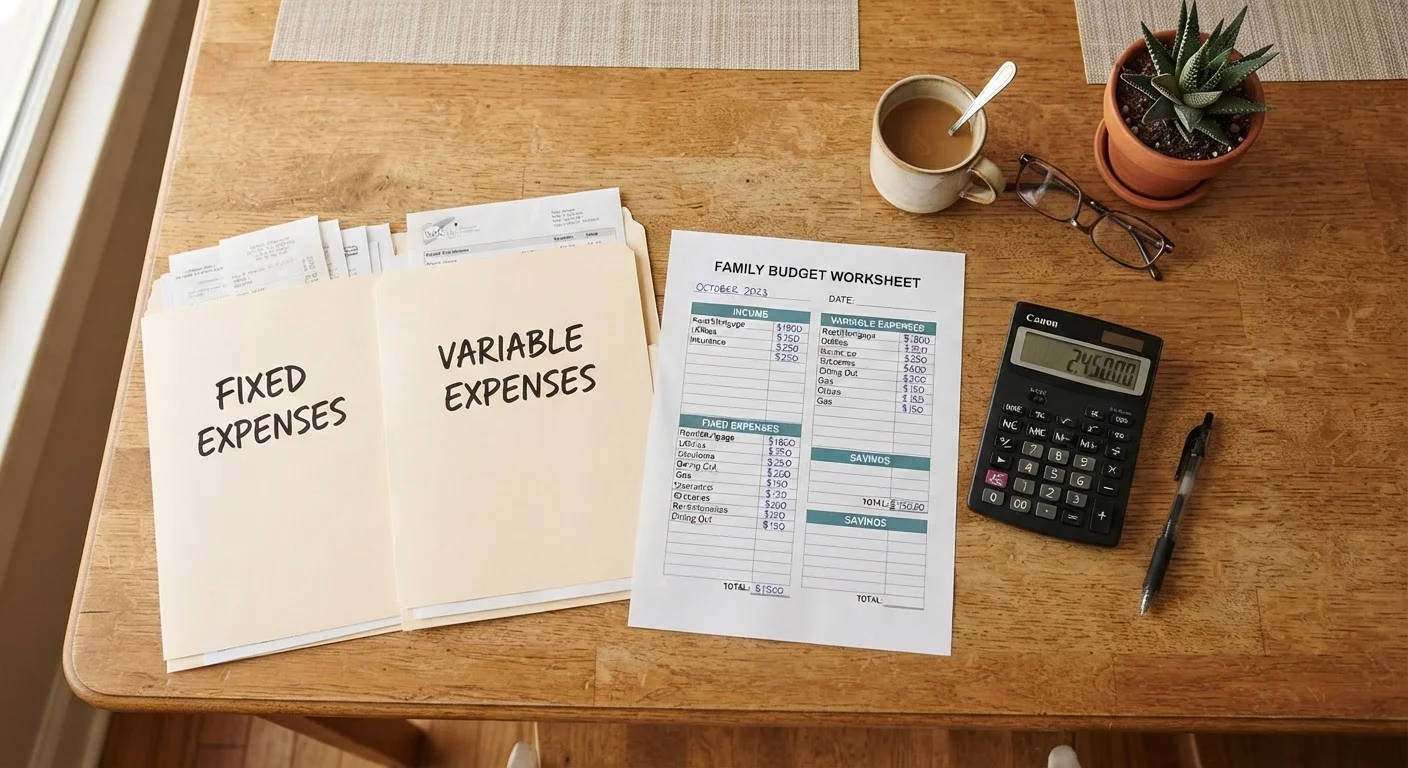
Fixed expenses are costs that stay the same amount every month, such as a mortgage payment or car loan. Variable expenses change from month to month depending on how much you use or buy, such as groceries or gas. Understanding which of your bills falls into which category helps you see where your money is locked in and where you have room to adjust.
Some financial planners add a third category called periodic or irregular fixed expenses, such as annual insurance premiums, which are predictable in amount but do not recur monthly.
What makes an expense fixed
A fixed expense is any cost where the dollar amount does not change from one billing cycle to the next. Your mortgage or rent payment is the clearest example. Whether you are home every day or traveling for two weeks, that payment stays the same. The same applies to a car loan, a personal loan, or fixed-rate student loan payments.
Other common fixed household costs include some insurance premiums paid monthly, a phone plan with a set rate, and subscriptions billed at a flat fee. The defining quality is predictability: you know the number before the bill arrives.
That predictability is useful for planning. When you sit down to build a family budget, fixed expenses are the first line items to place on paper because they represent the non-negotiable floor of your monthly spending.
What makes an expense variable
Variable expenses change based on behavior, usage, or market prices. Groceries are the most familiar example: a week with a birthday party costs more than an ordinary week. Gas spending rises when a family drives more. A monthly electric bill swings with the seasons.
Discretionary spending, such as restaurants, clothing, entertainment, and household supplies, is also variable. These costs are not fixed by a contract; the amount you spend reflects choices made during the month.
Variable costs are where most families have genuine flexibility. Cutting back on a variable expense usually does not require breaking a contract, taking a credit hit, or waiting out a lease term. That flexibility is why monthly budget reviews tend to focus heavily on the variable column.
Track variable spending for at least two months
One month of data can be misleading if it happened to be unusually high or low. Looking at two or three months gives you a more realistic average for each variable category. That average is what belongs in your budget, not the best-case or worst-case month.
Why the distinction matters for your family
When household income drops, or an unexpected expense appears, knowing which costs are fixed and which are variable tells you where you can actually respond. A family facing a job loss cannot easily stop a mortgage payment, but it can reduce grocery spending, pause a subscription, or skip a restaurant night. The ratio of fixed to variable expenses in your budget shapes how much room you have to maneuver.
Households with very high fixed expenses relative to income have less flexibility during disruptions. A family that commits most of its take-home pay to rent, loan payments, and fixed subscriptions has little variable spending left to trim. That is a risk worth recognizing before a crisis, not during one.
33%
Share of income spent on housing by average U.S. renter
According to the U.S. Bureau of Labor Statistics Consumer Expenditure Survey, housing consistently represents the largest single fixed expense category for American households.
~$1,000
Average monthly vehicle ownership cost including loan, insurance, and fuel
AAA's annual Your Driving Costs study estimates the total monthly cost of owning and operating a new vehicle, combining fixed loan and insurance payments with variable fuel and maintenance costs.
Understanding this split also helps with longer-term decisions. Before taking on a new fixed commitment, such as a car loan or a larger apartment, it is worth calculating how that payment will change the ratio and whether the remaining variable budget still covers realistic monthly needs. For decisions of that scale, consulting a licensed financial professional is a reasonable step.
How to categorize your own household spending
A practical way to map your spending is to pull two or three months of bank and credit card statements and sort each line item into one of two columns: fixed or variable. Costs that appear at the same amount every month go in the fixed column. Costs that fluctuate, or that do not appear at all in some months, go in the variable column.
A few items will feel like they belong in both. A utility bill with budget billing looks fixed but is administratively set, not contractually fixed. A grocery bill is variable but has a realistic floor below which a family realistically cannot go. Treat these with nuance: note the floor amount as a near-fixed cost and the spending above that floor as variable and adjustable.
Once both columns are filled in, add them up and compare the totals to your monthly take-home pay. That comparison is the foundation of a real spending plan. See the family budget planner guide for a structured way to organize those categories before your next month begins.
A family of four reviews their bank statements and finds their mortgage, car loan, and phone plan total $2,100 a month and never change.
A household notices their grocery bill ranged from $680 to $1,050 over four months, with the highest months coinciding with holidays and school starting.
After a parent's work hours are reduced, the family lists every monthly cost and finds that 78 percent of their take-home pay is already committed to fixed expenses.
Using this framework to find real savings
Once your expenses are categorized, the variable column is where to look first for savings opportunities. Small reductions across several variable categories add up faster than most families expect. Trimming grocery spending, reducing utility usage, and cutting one or two discretionary costs can meaningfully change a monthly balance without requiring any contract changes.
Fixed expenses are harder to reduce, but not impossible. Refinancing a mortgage or auto loan at a lower interest rate lowers the fixed payment. Negotiating a phone plan, dropping a gym membership, or moving to a less expensive home all reduce fixed costs permanently. These changes take more effort and sometimes carry costs of their own, so they are worth evaluating carefully. The saving versus paying down debt framework can help families decide what to do with any cash freed up by reducing fixed obligations.
This article is for general informational and educational purposes only and does not constitute personalized financial advice. For guidance specific to your household's situation, consult a qualified and licensed financial professional.